
Last updated November 25, 2026
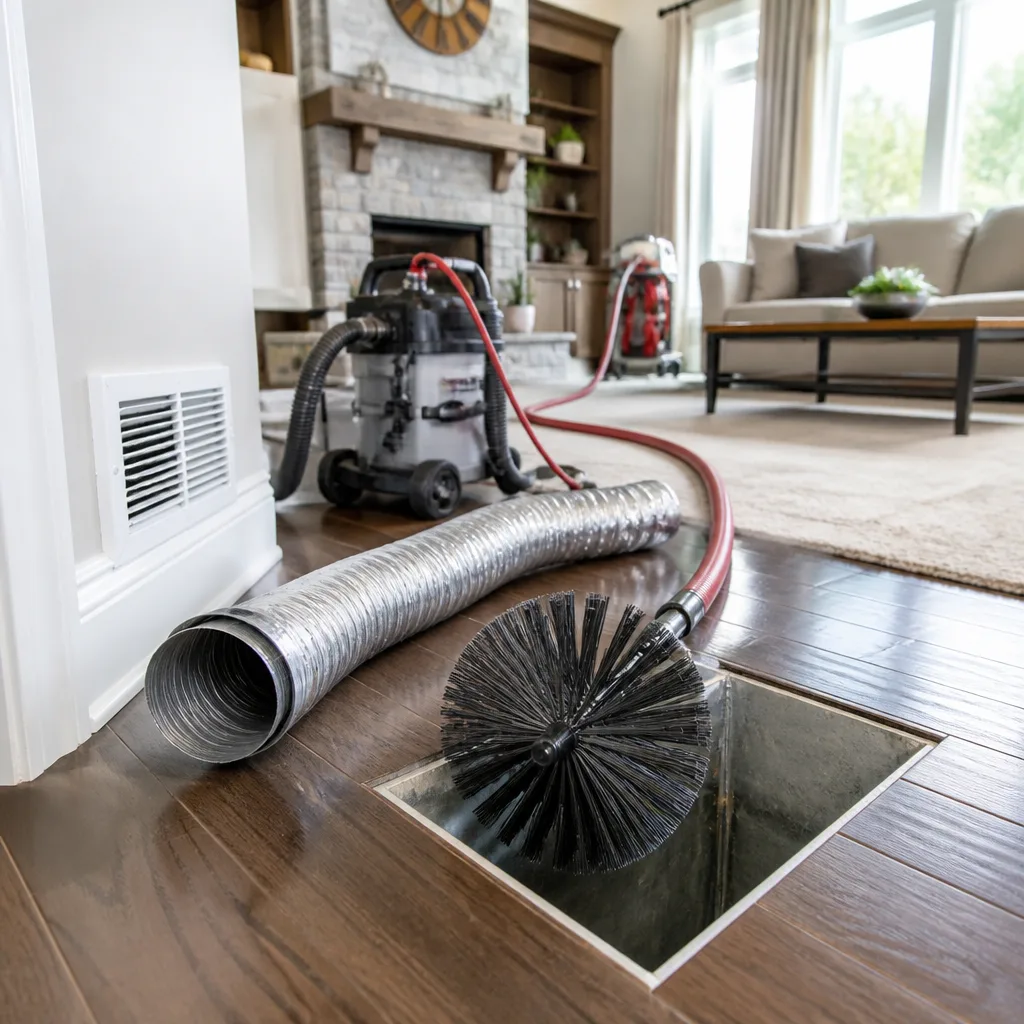 Whole-home duct cleaning
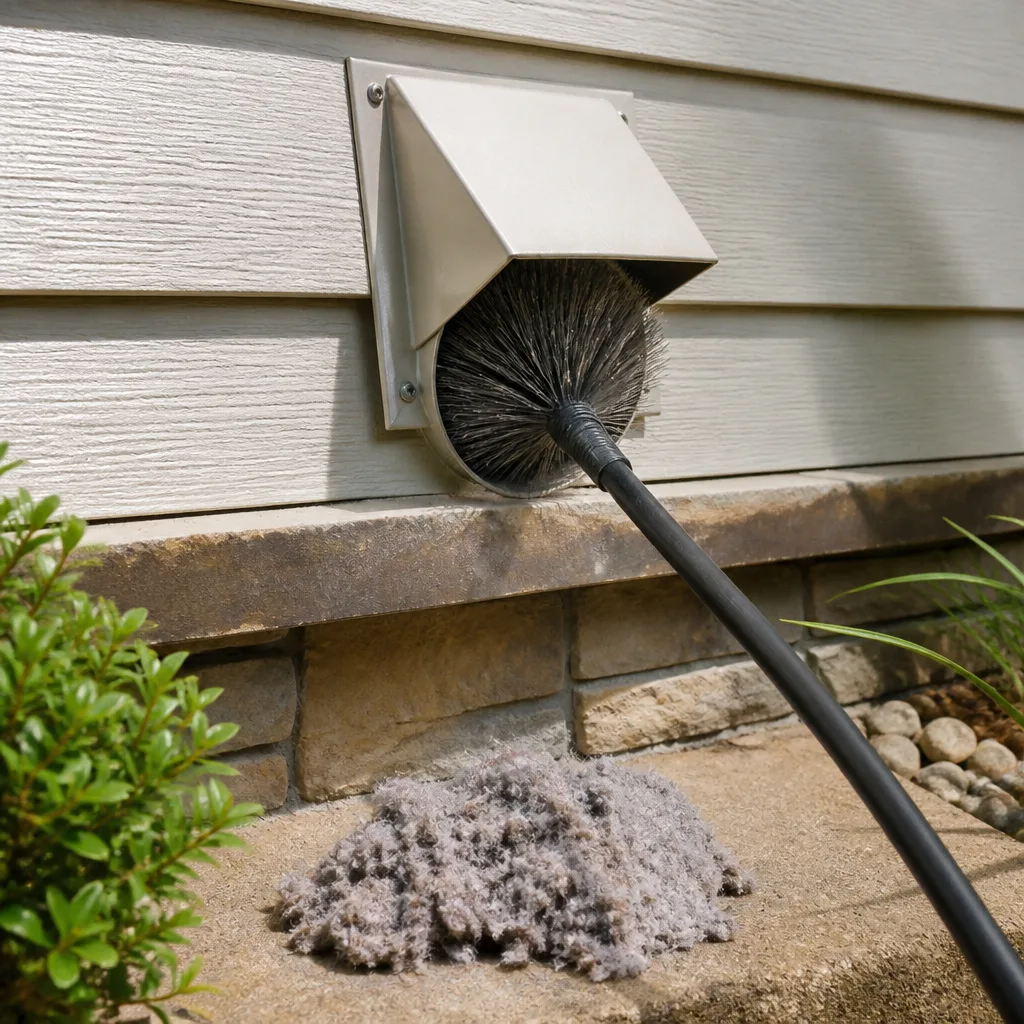 Dryer vent cleaning
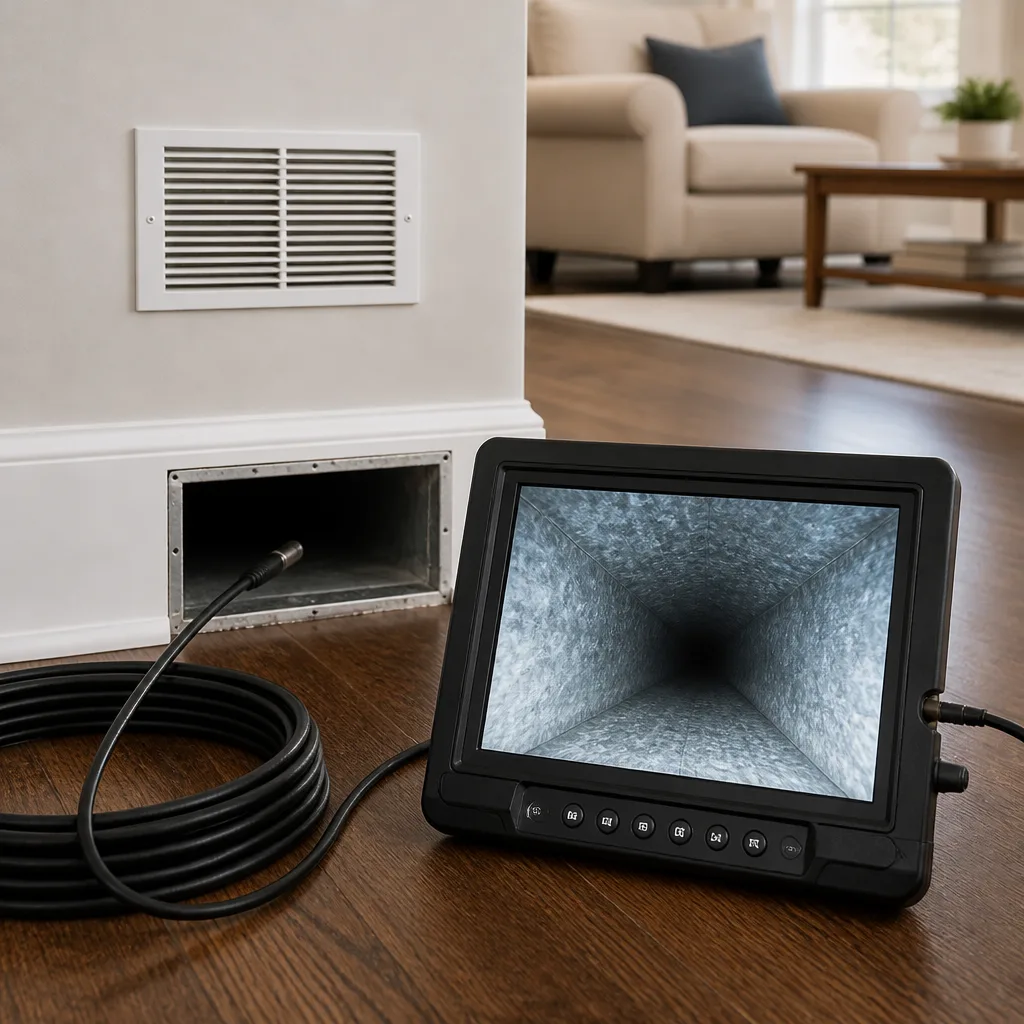 Camera inspection
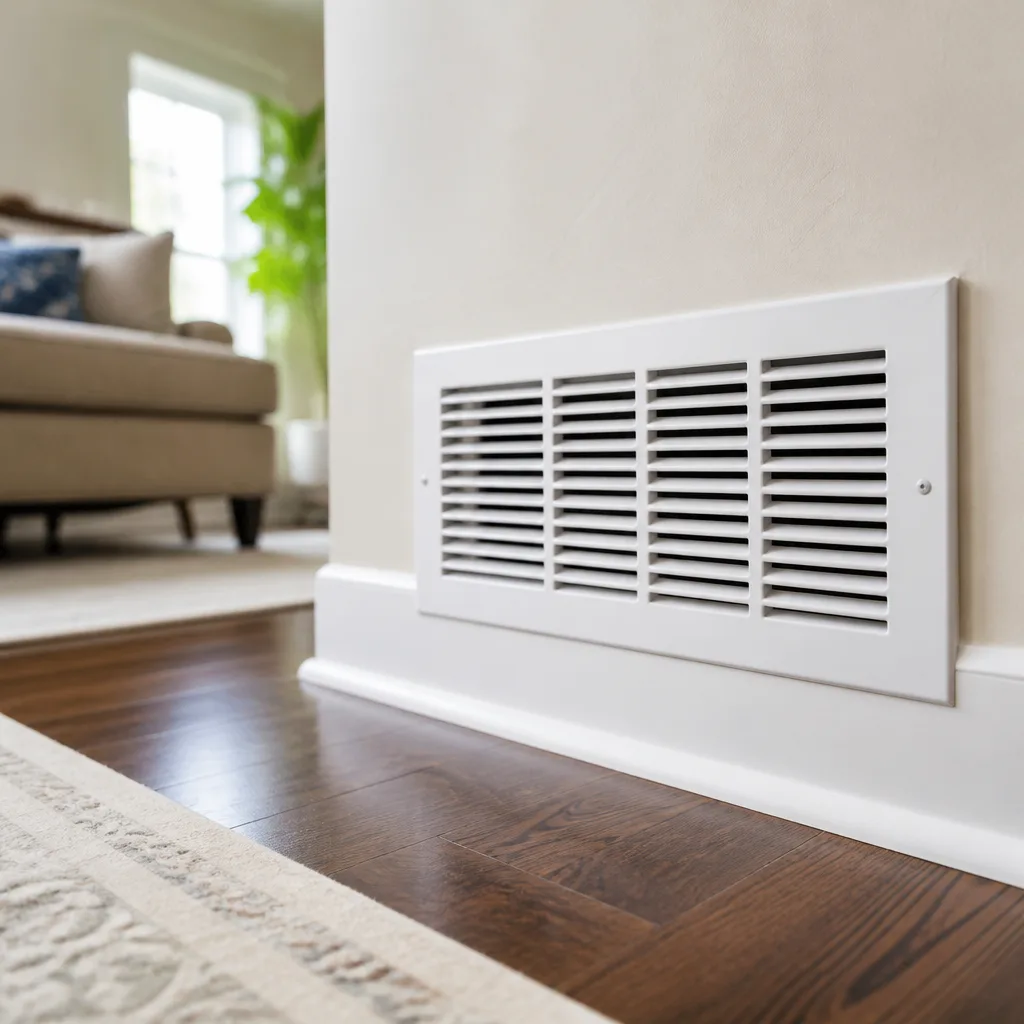 Sanitizing & deodorizing
Whole-system duct and dryer vent check with before-and-after photos - you see exactly what came out of your vents
That "$99 whole-house special" is a bait ad - the real number appears once they are in your hallway, or the "clean" is a shop-vac at the register. We photograph the inside of your ducts before and after instead.
The Complete Guide to Air Duct Cleaning in Anaheim Colony
Most people assume a dusty register means they need their ducts cleaned. Often it means the opposite: the dust is a symptom of an air handler, a coil, or a leaky return that the homeowner will pay to clean around twice a year rather than fix once. In a place like Anaheim Colony, where tract housing from the 1950s through the 1980s sits under air that the basin holds close, the duct system is the last checkpoint before everything your home accumulates reaches your lungs. That makes the whole chain matter, not one segment. This guide maps the full process: pre-inspection diagnostics, duct-type-specific cleaning, verification after the job, and the adjacent components most companies skip.
Quick Answer
A thorough duct cleaning in Anaheim Colony starts with a documented inspection (static pressure, leakage estimate, microbial check), matches the cleaning method to the duct material, removes contamination under negative pressure rather than blowing it around, and ends with before/after photos and airflow readings the homeowner keeps. It isn’t a single hose down a register. If a company can’t describe that sequence before it arrives, that’s your answer about the quality of the job.
Styles & brands we work with
- Whole-home duct cleaning
- Dryer vent cleaning
- Camera inspection
- Sanitizing & deodorizing
Table of Contents
- Why Anaheim Colony’s Housing Stock Changes the Job
- Flex Duct vs. Sheet Metal: Why the Method Must Match
- What a Pre-Cleaning Inspection Should Document
- Source Removal vs. Blow-and-Go: How to Tell Which You’re Buying
- Post-Cleaning Verification
- The Whole System: Coils, Blower, and Registers
- Why Repair and Sealing Come After Cleaning
- Common Mistakes to Avoid
- When to Call a Professional
- Frequently Asked Questions
Why Anaheim Colony’s Housing Stock Changes the Job
Anaheim Colony’s residential core was built through several distinct waves of tract development between the 1950s and 1980s. That matters because duct systems were designed differently in each wave: early builds often used rigid sheet metal trunk lines with few branches, mid-period homes added more supply runs as floor plans grew, and later builds leaned harder on flexible duct because it installs fast and bends around framing. By now, many of these systems have been partially modified by remodel work, added rooms, and replaced air handlers, so a single Anaheim Colony home can hold three generations of duct construction in one attic.
Then there’s the air itself. The South Coast Air Quality Management District ranks the greater Anaheim area among California’s highest for particulate matter days. In basin-trapped conditions, air that circulates through a home doesn’t carry the same load as air in a place with steady onshore wind and frequent rain scrubbing. Dust, pollen, and fine particulates settle longer and cycle through the return more often. A duct system in Anaheim Colony is therefore doing more filtering work than its builder ever intended, and any gap or leak in that system is a gap the whole house pulls through.
Practically, this means duct cleaning in Anaheim Colony isn’t a generic service. The inspection has to account for mixed duct types, and the cleaning has to account for a system built for a climate that no longer exists in the same form. That’s the baseline before anyone rolls out equipment.
Flex Duct vs. Sheet Metal: Why the Method Must Match
The single biggest predictor of a good result is whether the cleaning method was chosen for the duct material. Flex duct is a corrugated plastic sleeve over a wire helix. Sheet metal is rigid and usually lined with insulation on the interior in older Anaheim Colony builds. Each responds differently to agitation and suction, and a technician using one method for both gets an uneven result.
Here’s how the two differ in practice:
- Flex duct has ridges that trap debris along the inner wall. It needs gentle rotary agitation matched to the helix so the liner isn’t torn, plus suction strong enough to lift what the brush loosens. Over-aggressive brushing shreds a flex duct and turns a cleaning into a replacement job.
- Sheet metal handles firm rotary agitation and contact cleaning well. The failure mode is the opposite: under-agitating leaves a film of dust bonded to the metal, which re-enters the airstream as soon as the system runs.
- Insulated interior duct in older Anaheim Colony attics demands a closer eye on condition before cleaning. Degraded liner has to be identified and repaired, not simply agitated.
This is exactly where professional-grade equipment matters. Rotary agitation tools from Rotobrush and negative-pressure extraction systems from Nikro are what allow a technician to calibrate to the duct in front of them instead of running one setting for the whole house. Consumer-grade or rental-grade vacuums don’t have the airflow or the brush control to do it safely. Clean ducts start with the right machine.
What a Pre-Cleaning Inspection Should Document
A cleaning price quoted before anyone looks inside the system is a guess. The best residential duct cleaning starts with a documented inspection that tells the homeowner what the system is actually doing before money is spent on a vacuum. Three measurements matter, and each answers a different question.
- Static pressure readings. An HVAC technician measures pressure at the supply and return to understand how hard the blower is working to move air. High static pressure often points to a restriction, clogged coil, or undersized return. A cleaning that doesn’t address the underlying restriction accomplishes little.
- Duct leakage estimate. A general estimate of how much air the system loses before it reaches the registers. Leaky ducts are common in older homes where joints have loosened and seams have opened. A system losing substantial air through the attic can’t be efficient no matter how clean the ducts are.
- Microbial presence. A visual check of the air handler, evaporator coil, and visible duct interior for moisture, discoloration, or growth. Anaheim Colony homes with any history of water intrusion or a neglected coil often show signs that a simple sweep won’t resolve.
Add to those a practical map: which ducts are accessible, which are flex, which are sheet metal, where the return runs, and where duct insulation has failed. Before-and-after photos are only meaningful if there’s a before. A company that skips the documentation step has no baseline to prove anything against, and no honest way to recommend sealing when it’s needed. We repair what we find, not just report it.
Source Removal vs. Blow-and-Go: How to Tell Which You’re Buying
Duct cleaning methods are not equal. The standard the industry recognizes is source removal: contamination is physically dislodged from the duct surfaces and captured under continuous negative pressure, then removed from the home. The alternative, sometimes called blow-and-go, agitates debris inside the system and relies on the air handler’s return to pull it toward a filter that may not catch it. The difference comes down to whether the contaminant leaves the house or just relocates to a register.
You can usually tell which one you’re being sold by the equipment and the questions asked. Source removal requires a system that keeps the whole distribution network under negative pressure while rotary agitation runs inside the ducts. That’s what Abatement Technologies air-filtration equipment is designed to support: HEPA-level containment so the dust and debris released during cleaning don’t spill into living spaces. It also requires a technician who maps the system first and sequences the work duct by duct. A crew that shows up, hooks a hose to one register, and works from a single point is likely not doing source removal.
A second tell is the sequence. Source removal moves from the farthest and largest branches toward the main trunk and the air handler, so debris is always being pulled toward the vacuum rather than pushed back into rooms. Ask any company what order they work in. If they can’t explain it, that’s meaningful. If they describe sealing and sanitizing as part of the plan rather than an upsell after cleaning, that’s a sign they understand that a cleaned system has to stay closed.
Post-Cleaning Verification
The conversation after the cleaning is what separates a real job from a receipt. Verification is documented evidence that the work happened, and it should be handed over as part of the service, not offered on request.
Here’s what to look for:
- Before-and-after photos for each duct run. Not one photo of the air handler. Each cleaned branch should have its own record so you can see what changed.
- Post-cleaning airflow readings. Repeat static pressure and airflow measurements to show how the system is performing after cleaning. Restoring airflow to design is the whole object of the job.
- Filter baseline comparison. The condition of your filter before and shortly after cleaning tells you how much the system was moving and what was being captured. If a new filter loads heavily within a short period, that points to a still-open issue worth investigating.
- Register and vent condition. Registers, grilles, and return covers should be clean and reseated. Loose covers and gaps at the boot are common in Anaheim Colony homes where the original install has aged, and they’re easy to miss without a checklist.
The reason verification matters is that the homeowner has no way to see inside a duct system after the crew leaves. Photos and readings are the only honest proof. If a company tells you the job is done without those, that’s the answer. The same standard applies after we complete an air duct cleaning routine: the photos are part of the deliverable.
The Whole System: Coils, Blower, and Registers
Cleaning ducts without inspecting the coil and blower is like changing the oil and ignoring the filter. In Anaheim Colony homes, the evaporator coil and the air handler are often in the garage or attic, built in at a time when access panels were small. Those components collect dust steadily, and the coil in particular is where a lot of the air quality problem actually lives. A coil that’s coated with dust and microbial growth can reintroduce contaminants into freshly cleaned ducts on the first hot day.
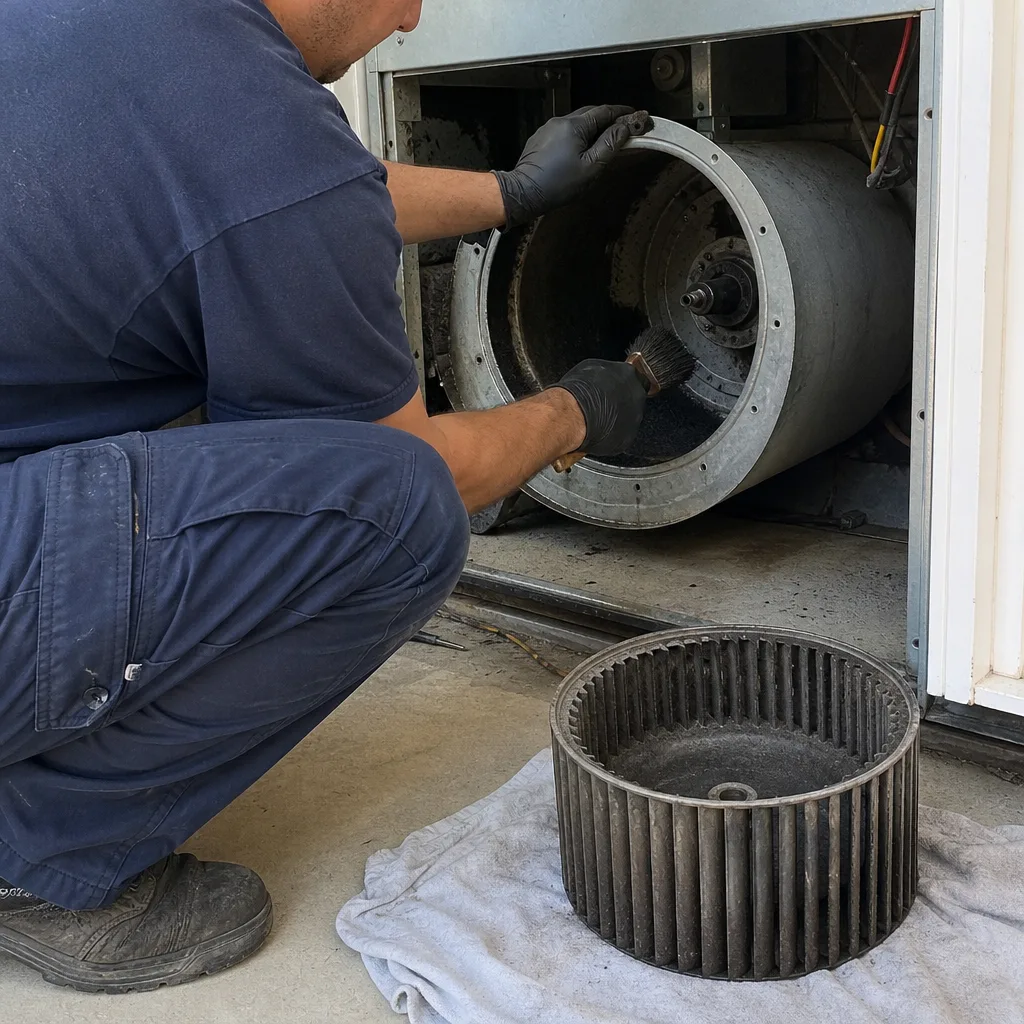
The blower wheel is the other overlooked component. Its blades look like a squirrel cage, and they catch debris on their leading edges. A loaded blower moves less air and makes more noise while doing it. When we clean an HVAC system, the blower is part of the inspection because a dirty blower explains half the comfort complaints homeowners raise, and cleaning it often restores airflow without any other change.
What’s worth knowing about the whole system approach:
- Coil condition drives indoor air quality and cooling efficiency, and it’s the first thing we check when someone describes a musty smell that comes back after cleaning.
- Blower wheel buildup is a common reason for weak airflow in Anaheim Colony homes with older systems that have never had a professional cleaning.
- Register sealing prevents conditioned air (and the contaminants riding with it) from moving between rooms or into unconditioned space.
We handle HVAC cleaning as one integrated scope rather than a separate line item because the components share air and share the same contamination. If a filter upgrade is part of the plan, Honeywell and Aprilaire filtration products match the systems in most of these homes and integrate with the existing ductwork without rebuilding the return.
Why Repair and Sealing Come After Cleaning
Cleaning a duct system that leaks is a temporary fix. Every seam that’s opened and every boot that’s separated will pull attic air, insulation fibers, and dust straight back into the ducts within a season. In Anaheim Colony’s older housing stock, joint loosening and seam separation are routine rather than unusual, especially in systems that have seen remodel work or a replacement air handler bolted onto duct runs designed for something else.
Duct repair and sealing is the step that closes the loop. It’s also the reason a company that cleans ducts but can’t seal them isn’t a full answer. Here’s how the sequence normally runs after cleaning:
- Locate leaks by visual inspection along accessible runs plus a leakage estimate before work begins.
- Seal at the joint, boot, and seam. This includes the register boots, where gaps to the ceiling or floor are common in older Anaheim Colony homes.
- Repair damaged sections. Torn flex duct, crushed runs, and disconnected branches are repaired or replaced rather than taped over.
- Reverify airflow. Static pressure and airflow readings are repeated after sealing to confirm the system is doing what it should.
Sealing and repair work is not a fancy add-on. It’s the difference between a cleaned duct system that stays clean and a duct system you’ll pay to clean again. If a company responds to a duct leak by recommending a bigger vacuum next time, that’s worth thinking hard about.
Do You Need Sanitizing After Cleaning?
Sometimes. Sanitizing addresses microbes, allergens, and odors that have settled into the duct surfaces, and it belongs after the source has been removed, not instead of removal. A sanitizing step on a duct system that’s still full of debris is money spent on spraying over the problem. When it’s done right, and we use Guardsman-grade sanitizing protocols for this, sanitizing addresses the organic load that cleaning alone leaves behind.
In Anaheim Colony homes, sanitizing is usually worth discussing in three situations: an older home whose system has been running for a long time without professional cleaning, a system that’s recovered from past water damage or a chronic moisture issue, and any home where occupants report recurring odors when the system first kicks on. Allergy and asthma households also ask about sanitizing routinely, and in those cases it’s a fair question. Sanitizing doesn’t replace cleaning and it doesn’t correct a moisture problem, but on a properly cleaned system it can close the gap between visually clean and actually clean.
Odor complaints that return after sanitizing point to a source somewhere else: moisture in the coil pan, a wet filter, or growth on the air handler interior. That’s why we treat airflow, coil condition, and duct cleanliness as one assessment.
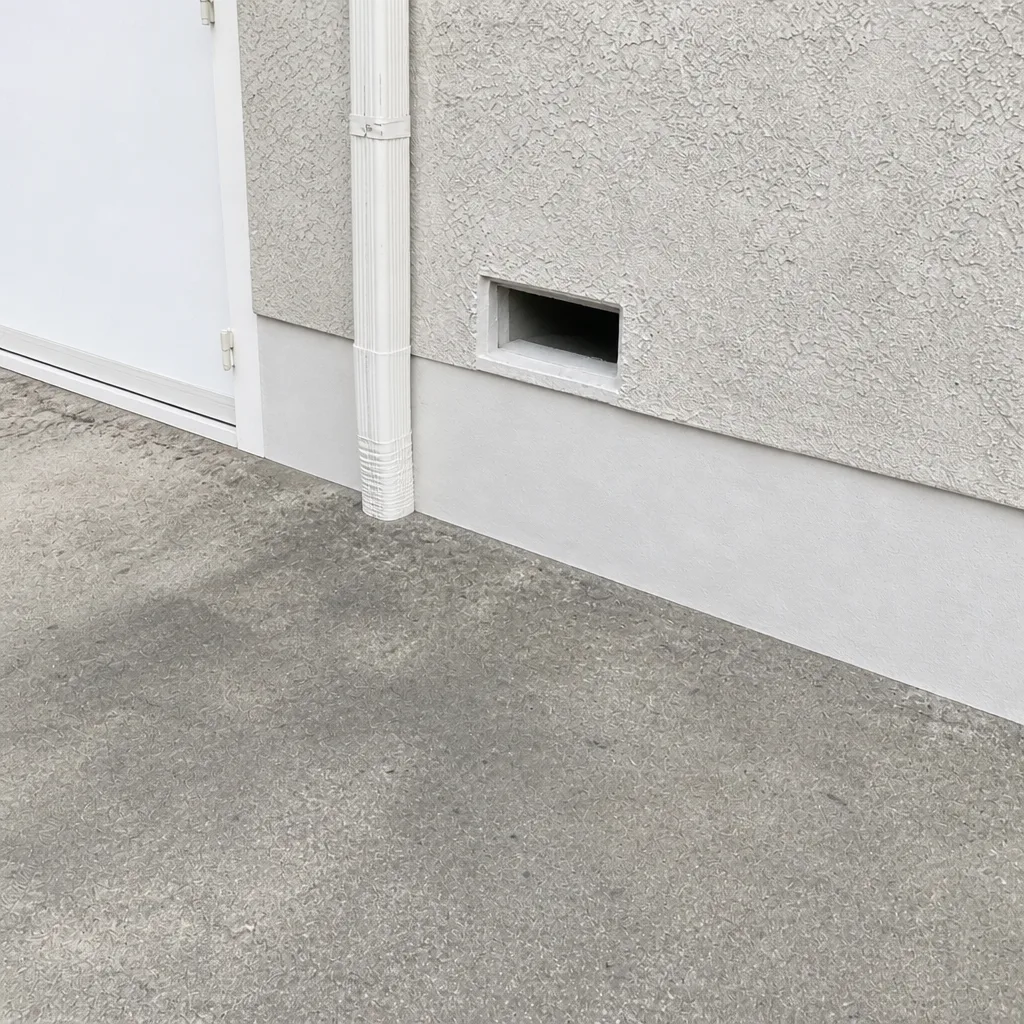
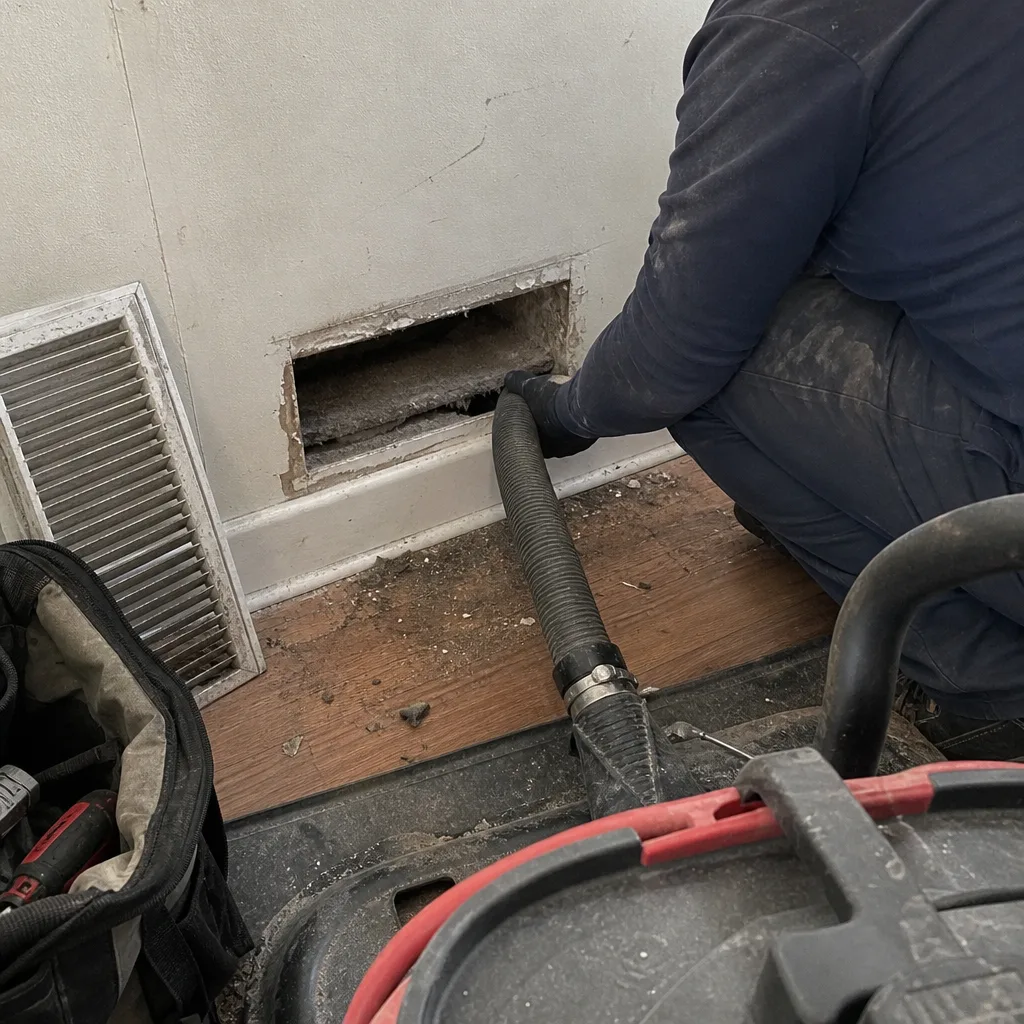
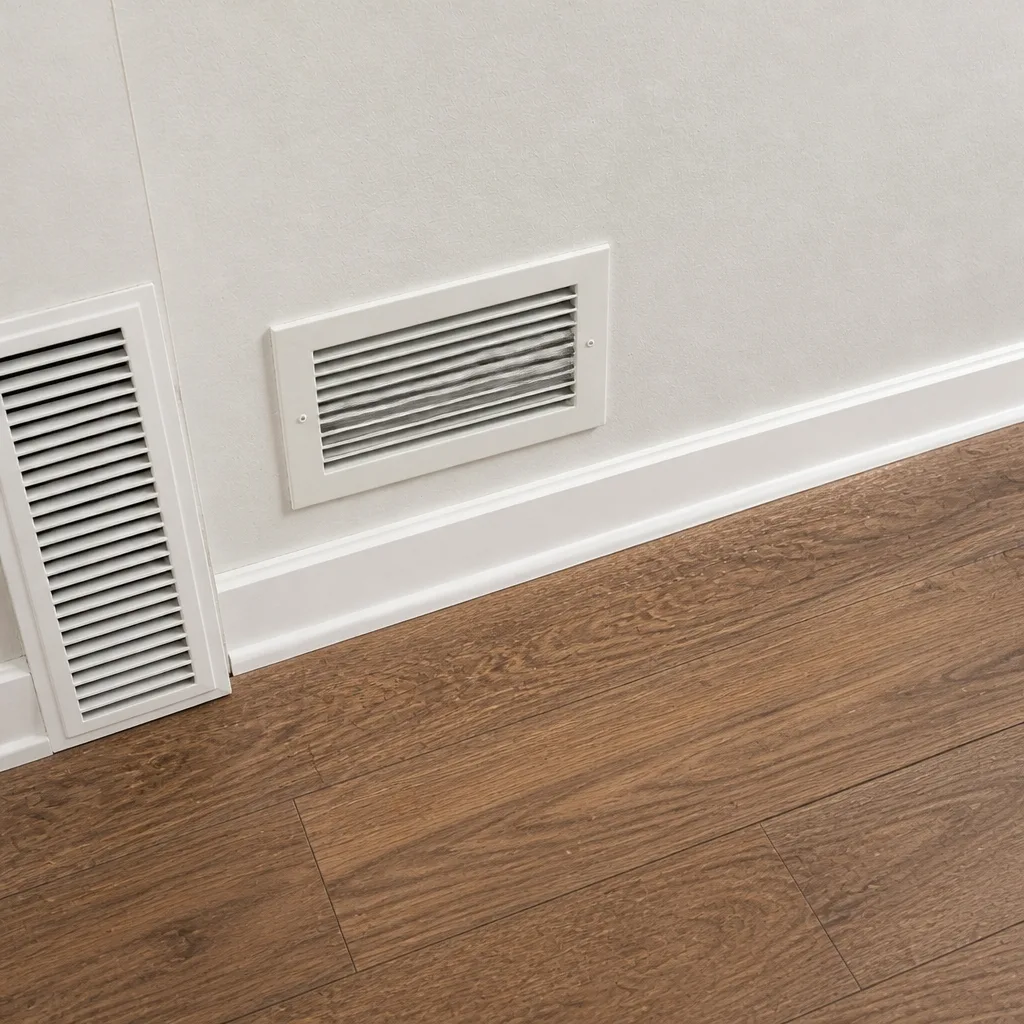
See the difference
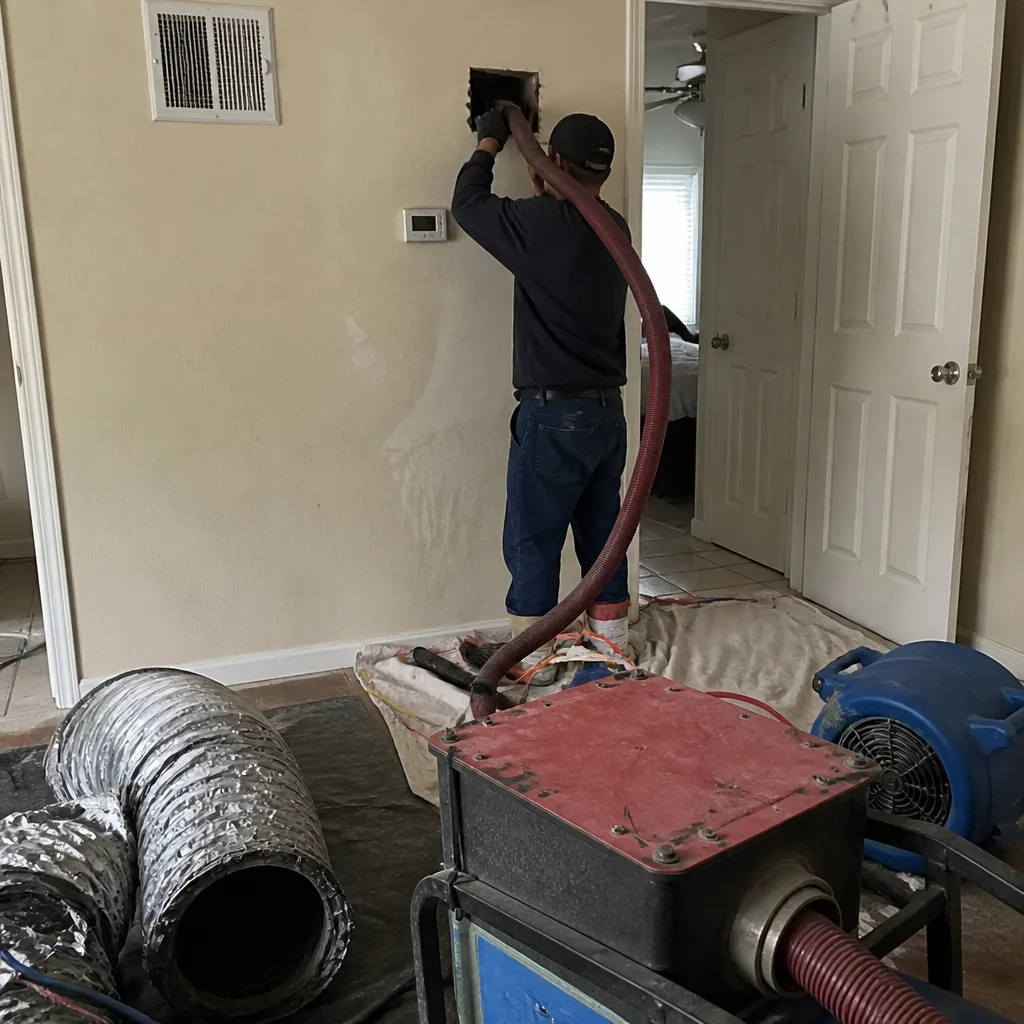 Before
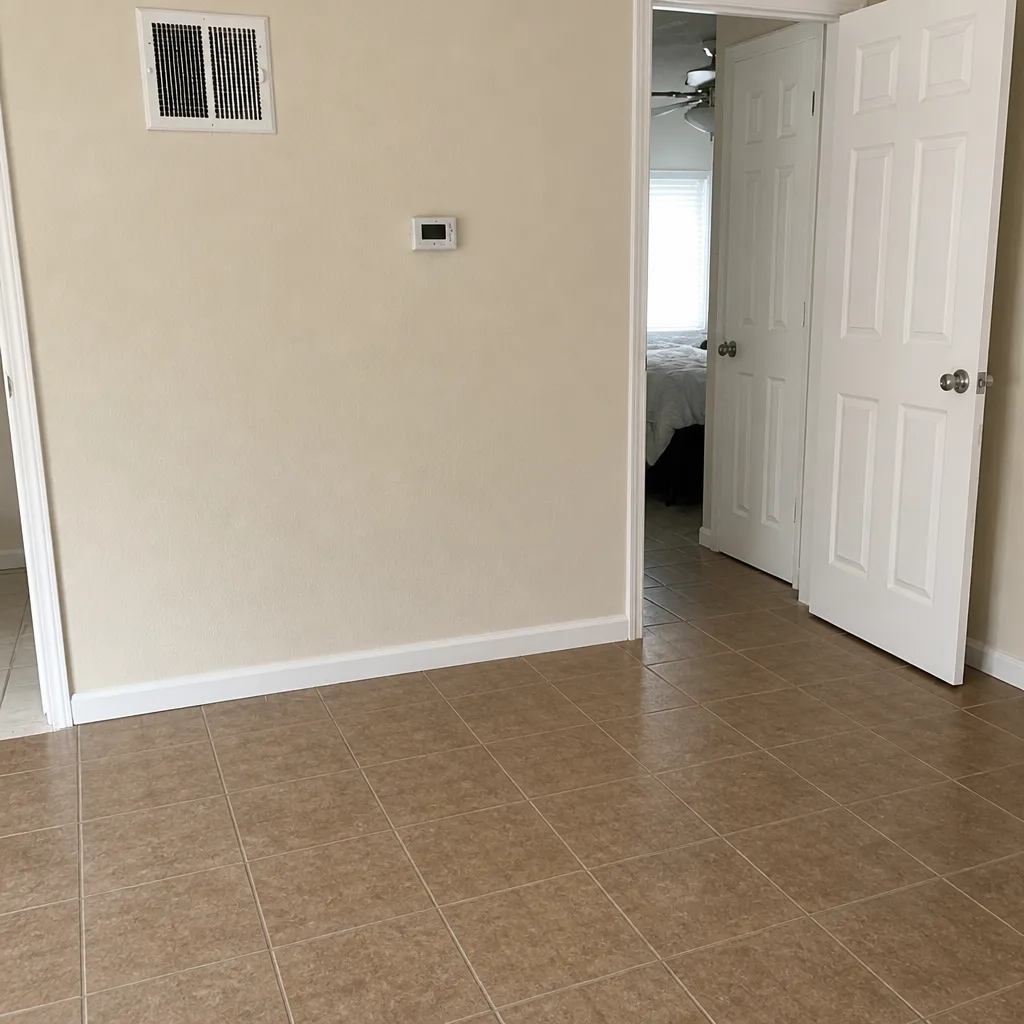 After
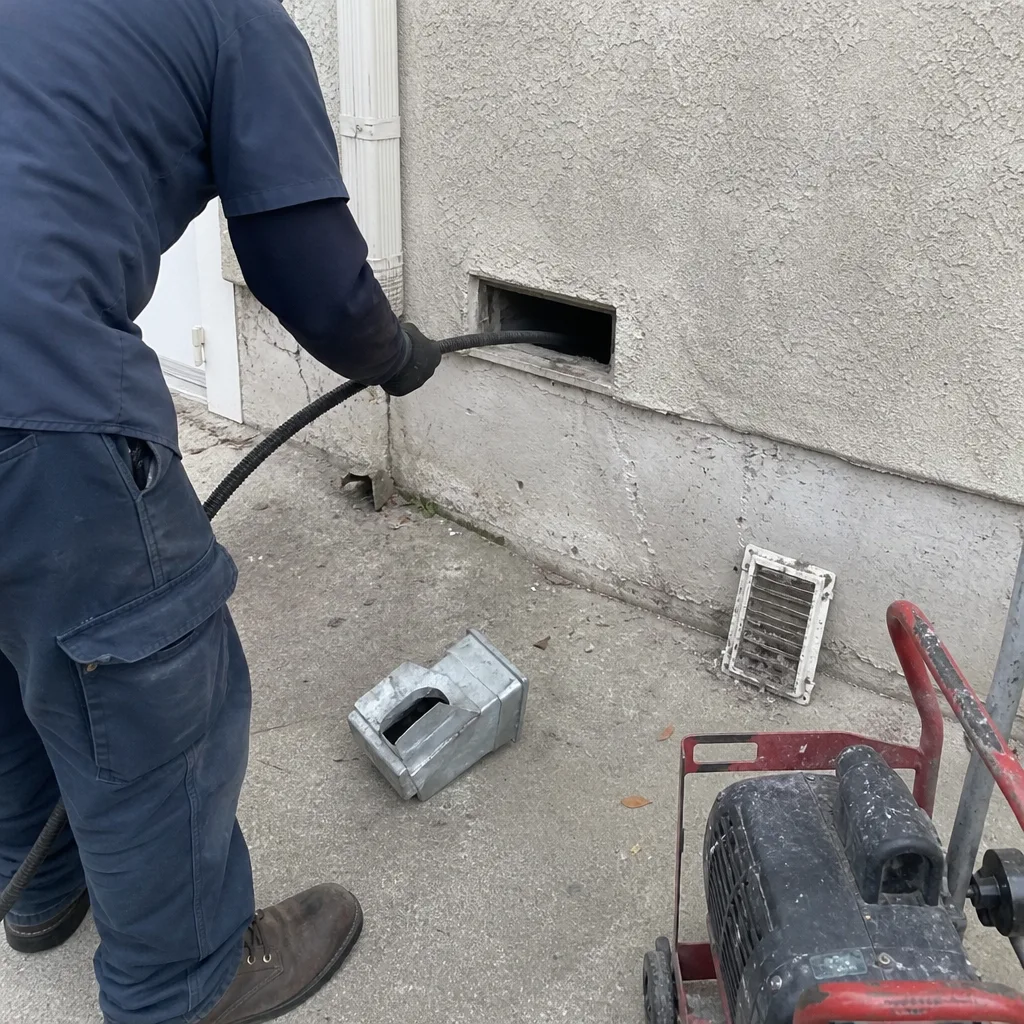 Before
 After
 Before
 After
Airflow, Static Pressure, and Why Numbers Matter
HVAC problems that look mysterious to a homeowner usually have a number behind them. Static pressure tells you how much resistance the blower is fighting. Airflow tells you how many cubic feet per minute are actually reaching the rooms. A duct system in Anaheim Colony that was sized for one air handler and later got a replacement with a different output will often have a static pressure problem nobody’s ever measured. The system runs longer, gets louder, and works harder than it should, and no amount of cleaning fixes a design mismatch.
That’s why pre-inspection numbers matter as much as the cleaning itself. If airflow is low in certain rooms and high in others, the problem is distribution, not dust. Register dampers, disconnected branches, and collapsed flex runs all show up in the readings before anyone gets on a ladder. In our experience, homeowners who see the numbers understand why the recommended work is what it is, and they also understand when a cleaning alone won’t fully solve their comfort problem. That’s an honest conversation to have, and it’s easier with readings than with opinions.
The other reason numbers matter is verification. Post-cleaning readings that show restored airflow are the single best proof that the job did something. Without a before number, there’s nothing to compare to.
Dryer Vent Cleaning and the Safety Side of Air Quality
The clothes dryer is an exhaust system that most people ignore until it complains. Lint accumulates in the dryer vent over years of normal use, and the National Fire Protection Association links dryer vent issues directly to a meaningful share of home fires. In a place like Anaheim Colony, where homes run hot through long stretches of the year and dryers get heavy use, the vent has more lint in it than the owner expects. Reduced drying efficiency is usually the first sign, followed by a dryer that gets hot to the touch on the outside.
Cleaning a dryer vent is not the same job as cleaning ducts, but it belongs in the same visit for the same reason: it’s an exhaust path that should be clear. The scope includes the full run from the dryer connection to the outside termination, the lint trap housing, and the exterior flap, which often gets stuck or blocked by lint and debris. We treat it as a safety service, and we don’t recommend homeowners try to work a cleaning brush through a long vent run on their own. Call us for dryer vent cleaning before the efficiency drop becomes something worse.
How Often Do Ducts Actually Need Cleaning?
There’s no single right answer, and the industry’s own guidance reflects that. The honest version is that ducts need cleaning when the inspection shows they need it, not on a calendar. In Anaheim Colony, some homes benefit from cleaning every few years, and some stretch much longer without a problem, depending on how the system is used, how well the filters have been changed, and whether the ducts have been kept sealed.
The signals that point toward cleaning are consistent:
- Visible dust or debris blowing from registers when the system starts
- Persistent musty or dusty odors when the air comes on
- A recent renovation, which pushes construction dust into the system regardless of how well the work area was taped off
- A new home purchase where the duct history is unknown, common in Anaheim Colony’s older homes where previous work may not have been documented
- Ongoing allergy or asthma symptoms in household members who are sensitive to airborne particulates
If none of those apply, cleaning may not be the right next step. An inspection can confirm that, and a company that says so when it’s true is easier to trust than one that finds a reason to clean on every visit.
Common Mistakes to Avoid
- Booking on price alone. The lowest quote in Anaheim Colony is often a blow-and-go service that moves dust rather than removing it. Ask what method and equipment will be used before you book.
- Skipping the inspection. A duct cleaning quote given over the phone without anyone looking at your system is a guess. It also means no baseline, so there’s no way to verify the outcome.
- Cleaning around leaks. Unsealed joints and boots pull contaminants back into the system quickly. Cleaning without addressing leakage is a short-term fix.
- Ignoring the coil and blower. A dirty coil and a loaded blower wheel can undo the benefits of a cleaned duct system. The whole HVAC chain needs to be assessed together.
- Skipping dryer vent cleaning. Reduced drying performance and a hot dryer shell are warning signs that shouldn’t be dismissed. The vent is an exhaust path and needs the same attention as the ducts.
- Not asking for photos. A cleaning with no before-and-after documentation leaves the homeowner guessing about whether it happened. Insist on the record.
- Assuming a filter upgrade fixes air quality on its own. A high-efficiency filter helps only when the ducts are clean and sealed. Start with the system condition before upgrading the filter.
When to Call a Professional
Call a professional when the system is telling you it needs attention: visible dust blowing from registers, musty odors that appear when the air comes on, a recent renovation, a new home with an unknown system history, or household members whose allergy or asthma symptoms worsen indoors. For landlords and property managers, duct and dryer vent cleaning between tenancies is an easy step to document and one tenants notice. If the dryer runs longer than it used to, or the outside vent flap isn’t clearing lint, that’s a call worth making sooner. Air Duct Cleaning Anaheim Colony offers free estimates in Anaheim Colony. Call (844) 625-7366. We answer 24/7. Fast dispatch from 7am to 7pm, Sunday through Friday.
Frequently Asked Questions
The price depends on the size of the system, the duct material mix, and whether repair or sealing is needed, and we price per system by written estimate rather than by the vent or the hour. A straightforward single-system cleaning costs less than one that includes coil cleaning, duct sealing, and sanitizing. The estimate is free, and the written estimate sets the final price before any work starts. Call (844) 625-7366 for an exact quote. Estimates are free.
Low quotes usually reflect a smaller scope, not a better deal: minimal equipment, less suction, no inspection, and no photos. A blow-and-go job that leaves the ducts partly contaminated often costs more over time because the homeowner ends up booking a proper cleaning soon after. Ask any company what method they’ll use and what documentation they’ll provide. Call (844) 625-7366 for an exact quote. Estimates are free.
Before-and-after photos of each duct run, post-cleaning airflow readings, and a filter baseline comparison are the only honest proof you’ll get. A company that documents the job gives you something you can verify. Ask for that as part of the scope, not as a favor. Call (844) 625-7366 for an exact quote. Estimates are free.
There’s no fixed interval. Cleaning is worth doing when the inspection shows a reason: visible debris, odors, recent renovation, or allergy symptoms that track with system use. In Anaheim Colony’s older homes, a system that’s been kept sealed and filtered properly can go longer between cleanings than one that hasn’t. Call (844) 625-7366 for an exact quote. Estimates are free.
Yes. Cleaning, repair, and sealing are handled as one scope. Leaks are located during the inspection, sealed at the joints and boots, and the system’s airflow is reverified afterward. That’s how a cleaned system stays clean. Call (844) 625-7366 for an exact quote. Estimates are free.
Yes, we do, and it’s a safety service rather than a comfort service. Lint buildup in the vent is a fire concern linked to dryer-related home fires, and reduced drying efficiency with a hot dryer shell are the signals. It’s a good complement to duct cleaning if the two haven’t been done together. Call (844) 625-7366 for an exact quote. Estimates are free.
The Bottom Line
Air duct cleaning in Anaheim Colony is a process, not a product. The right version starts with an inspection that documents static pressure, leakage, and microbial condition, matches cleaning to the duct type, uses professional-grade equipment under negative pressure, and ends with photos and readings the homeowner keeps. It also accounts for the coil, the blower, and the duct sealing that determines whether the system stays clean. If you’re booking a cleaning, ask the questions in this guide before anyone shows up. Our technicians have up to 9 years of experience, and we back the work with a free estimate, one flat price per system agreed before we start, and before-and-after photos of your own ducts. Call (844) 625-7366. We answer 24/7. Fast dispatch from 7am to 7pm, Sunday through Friday.
Written by the team at Air Duct Cleaning Anaheim Colony.