
Last updated November 25, 2026
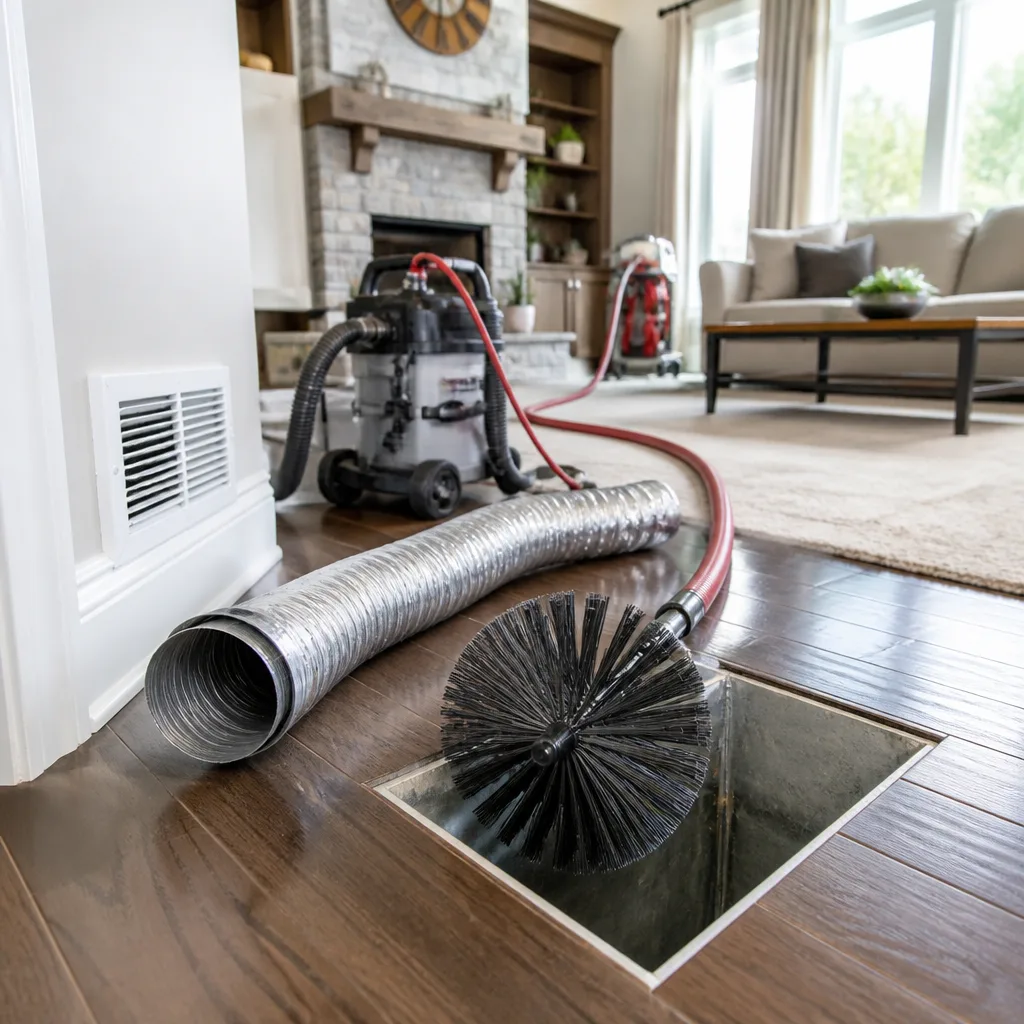 Whole-home duct cleaning
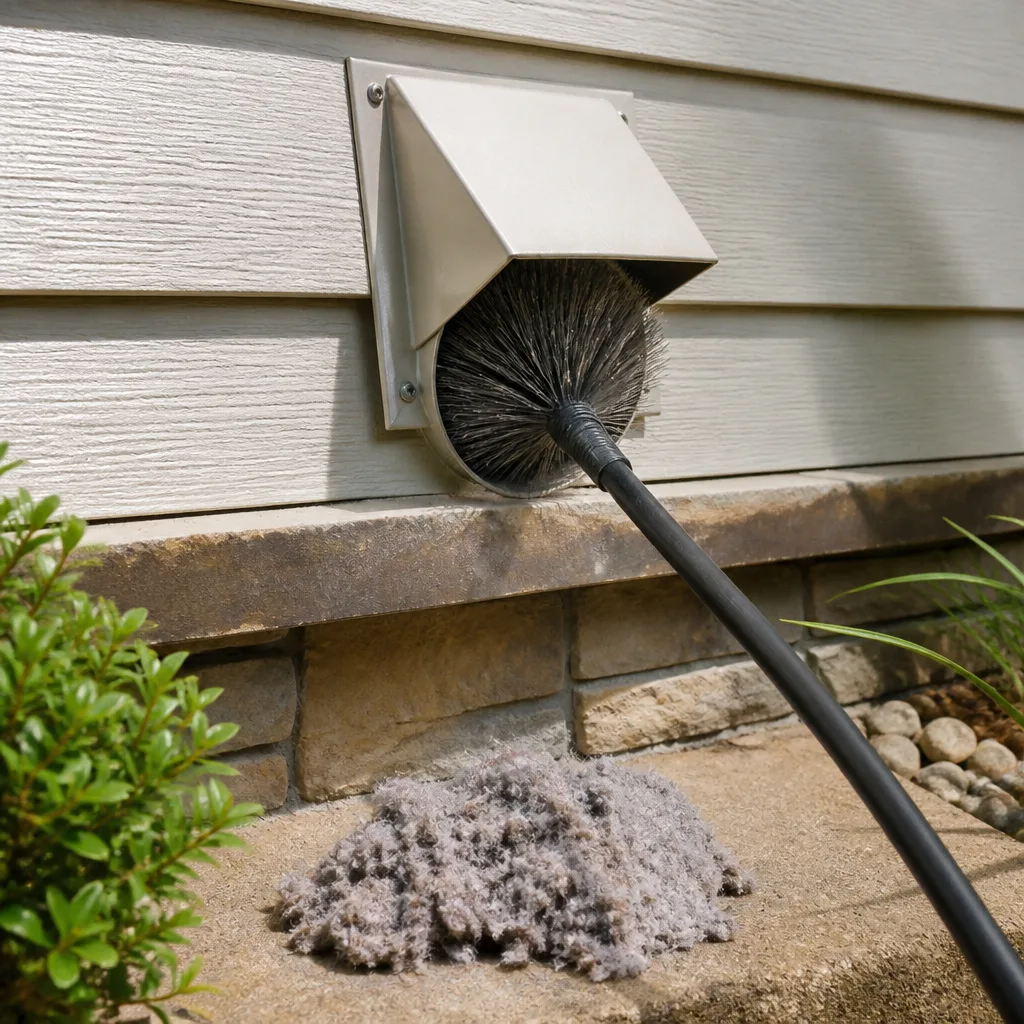 Dryer vent cleaning
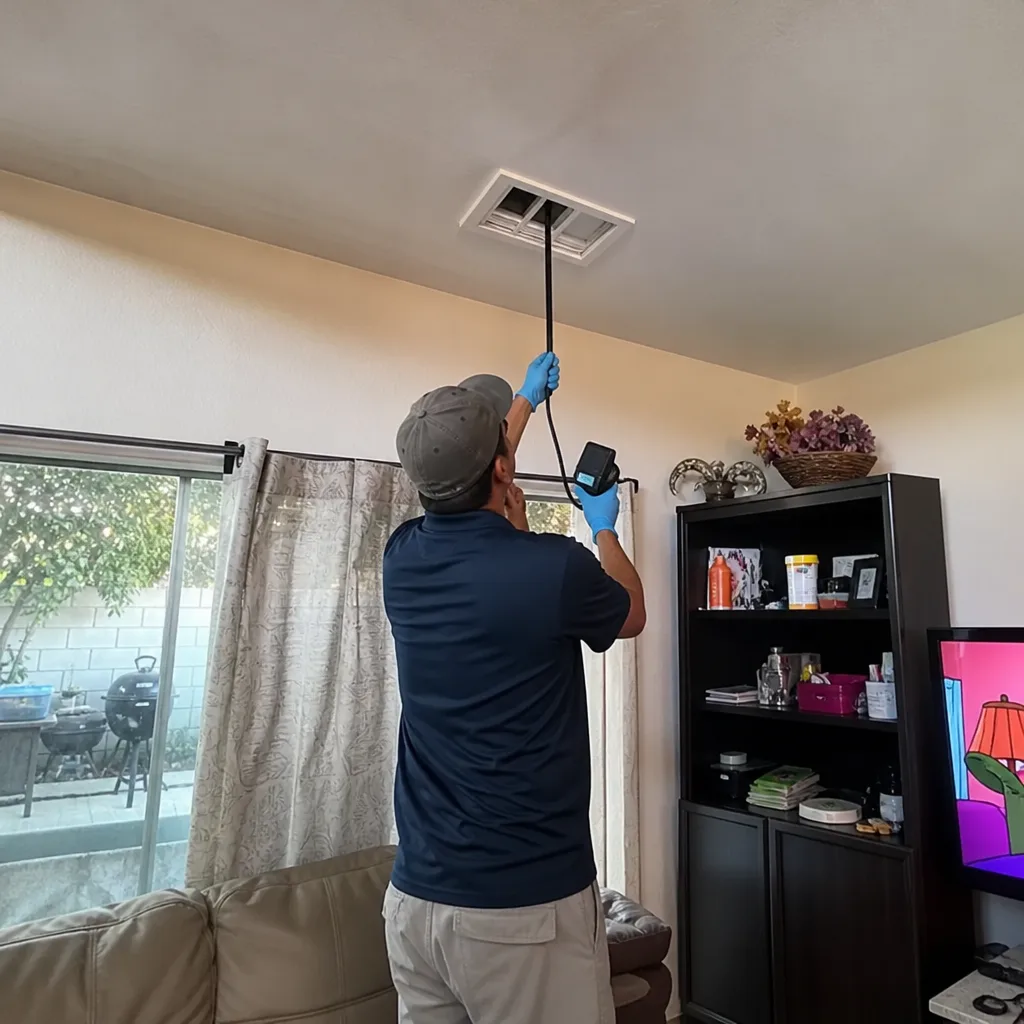
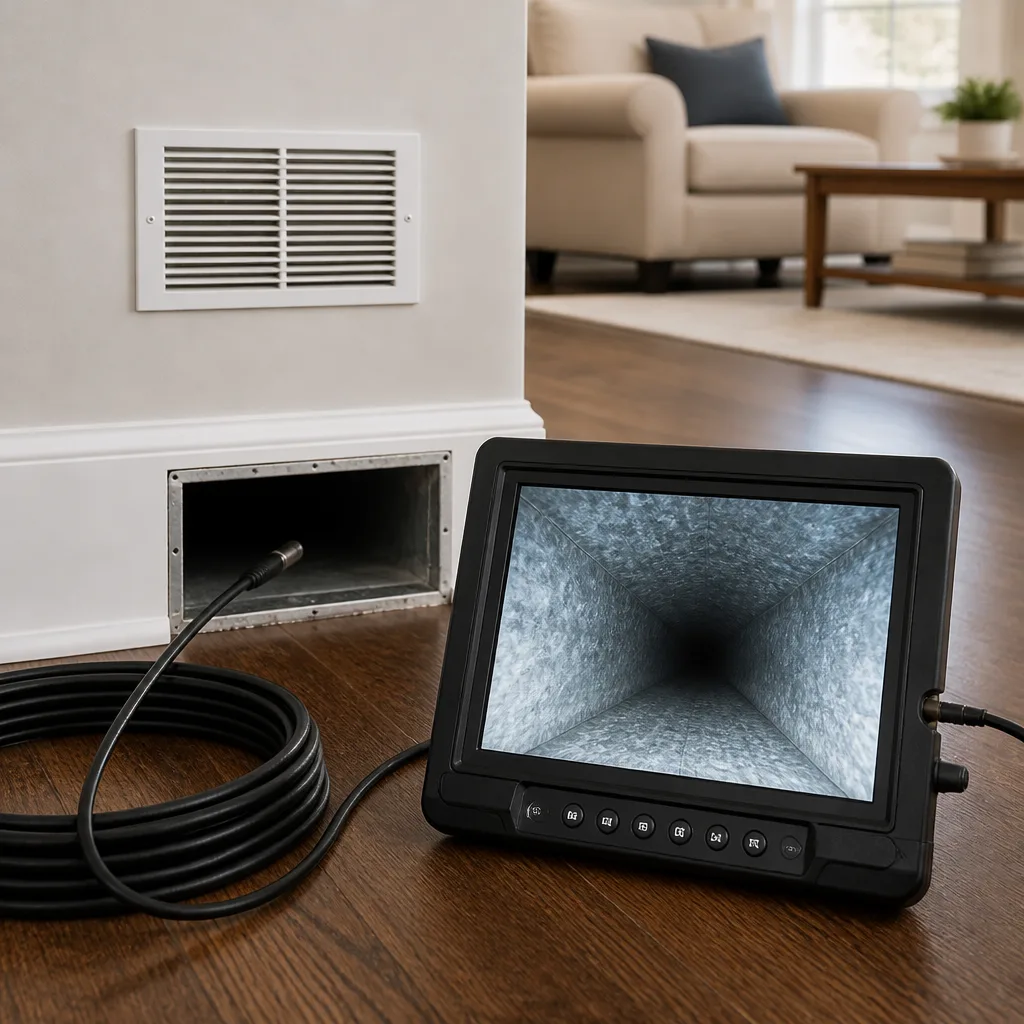 Camera inspection
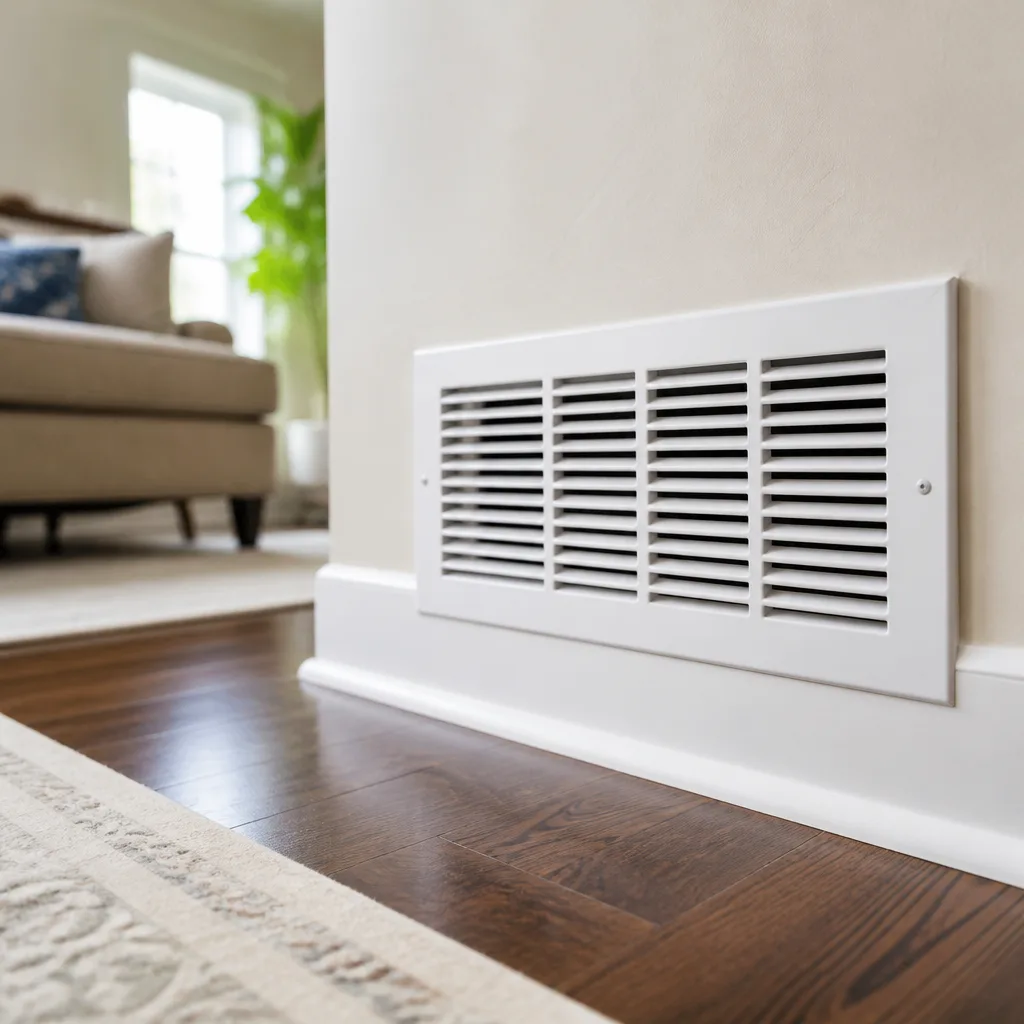 Sanitizing & deodorizing
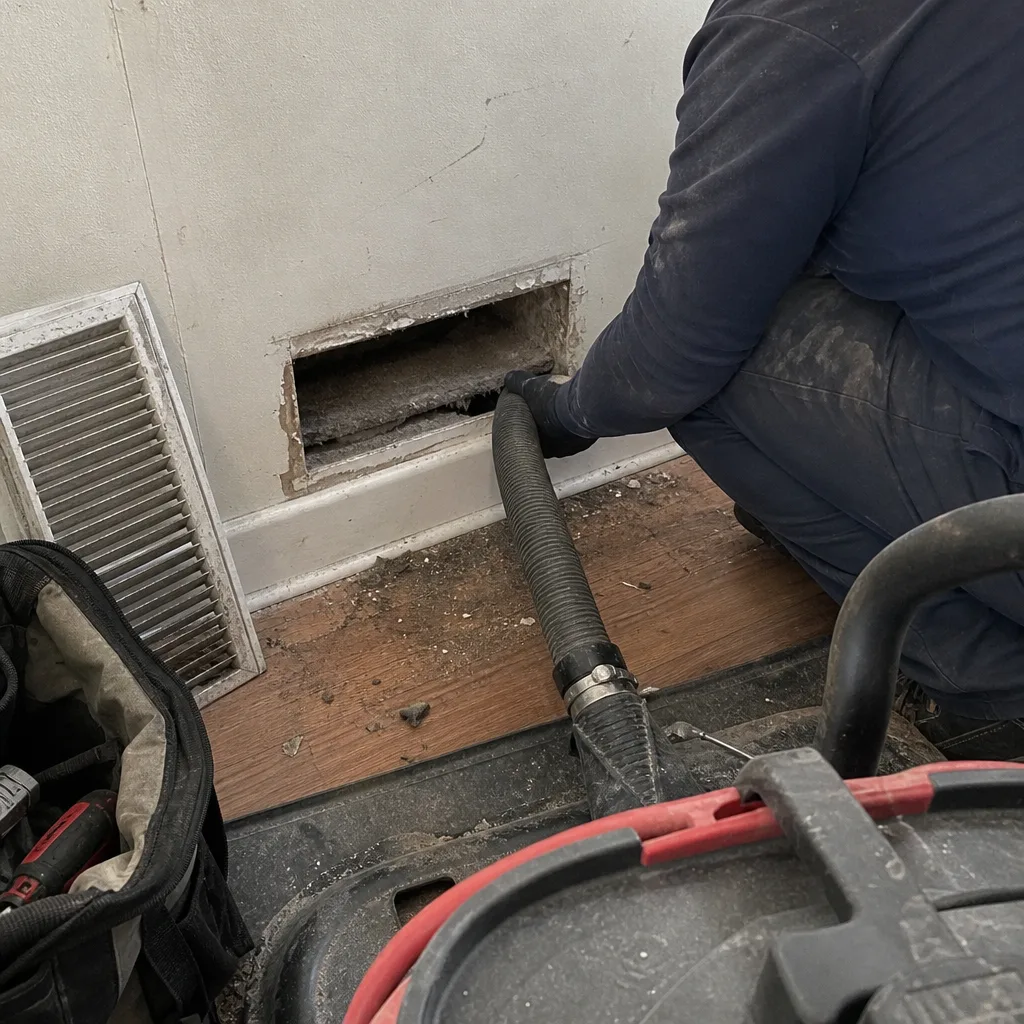
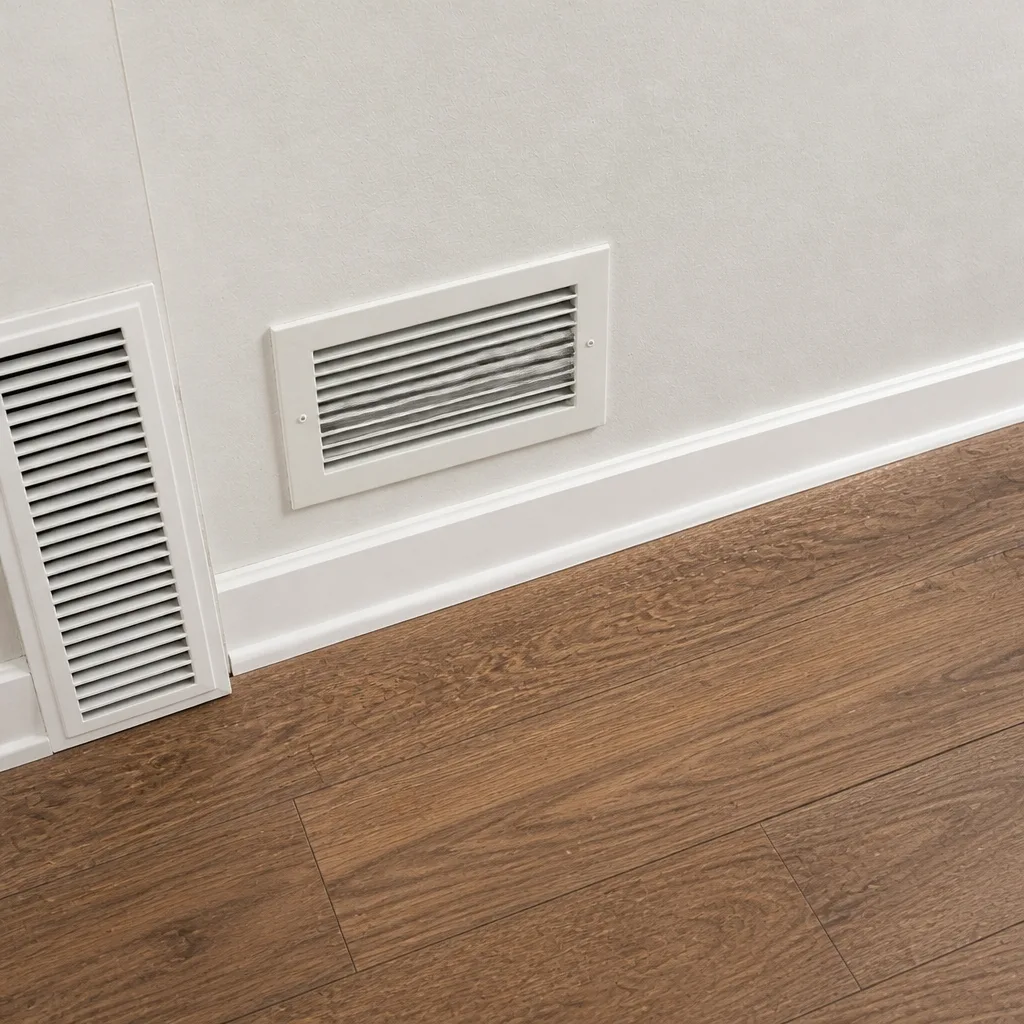
Whole-system duct and dryer vent check with before-and-after photos - you see exactly what came out of your vents
That "$99 whole-house special" is a bait ad - the real number appears once they are in your hallway, or the "clean" is a shop-vac at the register. We photograph the inside of your ducts before and after instead.
Seasonal Air Duct Cleaning Care for Anaheim Colony: Year-Round Homeowner’s Guide
Most homeowners in Anaheim Colony schedule duct cleaning in spring, when the weather turns pleasant and the house finally feels closed up again. That timing is backwards. The heaviest particulate load of the year reaches Anaheim Colony ducts from October through December, during the Santa Ana wind period, and the quietest air-quality stretch of the year follows right behind it. Cleaning in April means you spend the dustiest months pulling that debris through the system before anyone touches it. This guide lays out a care calendar built around the three air-quality seasons Anaheim Colony actually has, what each one deposits into your ductwork, and the specific maintenance window that pays off for each. You’ll get a month-by-month task list, a post-wildfire smoke protocol, and the signs that tell you to stop guessing and bring in professional equipment.
Styles & brands we work with
- Whole-home duct cleaning
- Dryer vent cleaning
- Camera inspection
- Sanitizing & deodorizing
Quick Answer
Air duct cleaning care in Anaheim Colony should be timed around three air-quality seasons, not four weather seasons: the Santa Ana wind period (October to December) that loads ducts with fine particulate, wildfire smoke events that push ultrafine particles past filters, and the marine layer months (May and June) that raise humidity and mold risk inside flex duct. The most useful single step is a pre-Santa Ana inspection and filter upgrade each September, followed by a professional cleaning after the wind season ends. A second look at the duct liner post-wildfire and a condensation check in late spring complete the year.
Table of Contents
- Why Anaheim Colony Has Three Air-Quality Seasons, Not Four
- The Santa Ana Season: What Wind-Driven Particulate Does to Your Ducts
- Preparing for Santa Ana Winds: Your September Checklist
- The Post-Wildfire Smoke Protocol for Anaheim Colony Homes
- The Marine Layer Months: Humidity, Condensation, and Mold Risk
- A Month-by-Month Duct Care Calendar for Anaheim Colony
- What a Real Duct Inspection Looks Like From the Register to the Air Handler
- Common Mistakes to Avoid
- When to Call a Professional
- Frequently Asked Questions
- The Bottom Line
Why Anaheim Colony Has Three Air-Quality Seasons, Not Four
Anaheim Colony doesn’t get a real winter. It gets a wind season, a smoke season that overlaps it unpredictably, and a damp season that arrives in late spring. Each one stresses your duct system differently, which means each one calls for a different response. A national “clean in spring, clean in fall” template ignores all of this.
Here’s how the three seasons break down in practice:
- Santa Ana wind period (October to December). Dry, gusty offshore winds lift fine dust, pollen, and grit from the inland basins and foothills and drive it against the Anaheim Colony side of the hills. Duct systems pull that material in through every return grille, and much of it settles on the duct floor where a standard filter never touches it.
- Wildfire smoke events (variable, but most often fall and winter). Smoke brings a different particle profile than wind dust: ultrafine particles small enough to slip past most residential filters and, in some cases, lodge in the duct liner itself.
- Marine layer months (May and June). Cool overnight air off the ocean meets warm daytime air and pushes relative humidity up inside the house for weeks. That’s when condensation can form inside metal and flex duct runs, and when mold spores that have been sitting dormant on duct surfaces get the moisture they need.
The practical upshot: in Anaheim Colony, duct care is less about a seasonal deep clean and more about matching the right intervention to what the last three months put into your system. Our technicians have up to 9 years of experience reading exactly that kind of seasonal loading pattern, and it changes what we recommend from one household to the next. If you’re starting from zero and just want the fundamentals, start with air duct cleaning in Anaheim Colony and build from there.
The Santa Ana Season: What Wind-Driven Particulate Does to Your Ducts
Santa Ana winds are the dominant duct-loading event of the Anaheim Colony year. They don’t just blow dust around your house; they push it into the return air stream, where it settles on duct walls, inside register boots, and across the face of the evaporator coil. The result is a gradual buildup that shows up first as dustier surfaces and a mustier smell when the system kicks on, and later as reduced airflow.
What actually gets deposited, and where:
- Fine grit and mineral dust settle on the horizontal runs and low spots of the duct system. This is the material that a filter upgrade alone won’t remove once it’s on the duct floor.
- Pollen and plant debris collect at return grilles and in the first few feet of the return trunk, where velocity drops and particles fall out of the air stream.
- Construction and soil dust from nearby grading, landscaping, and road work gets stirred up and drawn in. In denser Anaheim Colony blocks, that can mean neighboring remodels contribute to what lands in your ducts.
- Fibrous material from deteriorating duct liner or insulation can be dislodged by the same vibration and pressure changes that come with wind-driven temperature swings.
The critical point: this material accumulates most heavily during the wind season, but it does most of its damage in the months after, when you’re running the system hard for heating and the debris is recirculating. That’s why a post-Santa Ana cleaning beats a spring cleaning in this climate. If you want the full explanation of the cleaning process itself, our air duct cleaning page covers the agitation and negative-pressure extraction sequence from register to air handler.
One more thing worth knowing. The Santa Ana period also brings low indoor humidity, which makes dust lighter and more airborne. That’s the window when a house with a marginal return filter starts showing visible dust plumes near the supply registers, because the system is pulling harder against a collapsing filter while the air is loaded.
Preparing for Santa Ana Winds: Your September Checklist
The single highest-value maintenance window in Anaheim Colony is September, before the wind events begin. A few hours of prep in early fall prevents a much larger load from reaching the coil and the duct liner over the following three months.
Work through this in order:
- Upgrade the return filter. Move to a MERV-rated filter that matches your system’s pressure tolerance. A filter that chokes airflow is worse than a dirty one; your HVAC manufacturer specifies the maximum MERV your system can handle, so check that before buying. Brands like Honeywell and Aprilaire make whole-home filtration equipment that handles this far better than a standard one-inch slot filter, and we stock and service those lines.
- Inspect every register and air return for gaps. Run a hand around the edges of each grille while the system runs. If you feel a leak, that’s a slip-joint failure, and it’s pulling dirty air out of the wall cavity or attic rather than from your living space. Sealing these is part of HVAC cleaning and reduces the load the ducts see all season.
- Check the outdoor condenser for debris. Santa Ana winds carry fine sand and plant material into the coil fins. A clogged condenser makes the whole system run longer and hot, and that pushes more air (and more particulate) through the ducts.
- Look for moisture stains or rust at the air handler cabinet. Rust lines or water marks at the seams point to condensation problems earlier in the year. Note them now; don’t wait for spring.
- Confirm return grille coverage. Years of remodeling and furniture rearranging can leave a return blocked or a register covered. Blocked returns let pressure build in the duct and force air through leaky joints.
- Schedule a pre-season inspection. This is the one step we can’t stress enough: get a camera look at the duct interior before the season begins so you know your baseline. Then you’ll know exactly what the season actually deposited.
That last point matters more than people expect. “From the register to the air handler” is the only way to know what you’re starting with. Without that baseline, any post-season recommendation is guesswork.
The Post-Wildfire Smoke Protocol for Anaheim Colony Homes
Wildfire smoke events in the Anaheim area are unpredictable in timing, but they hit the duct system in a way that’s distinct from wind dust. Smoke is mostly ultrafine particles, and those particles are small enough to pass through standard filters and, in a well-sealed home, still find a way in through gaps and intake leaks.
The core protocol for the days around a smoke event:
- Close windows and exterior doors before the event starts. This is obvious, but it’s the first lever. The whole protocol depends on minimizing incoming air volume.
- Run the system with the fan set to “on” only if you have a high-MERV filter. A high-efficiency filter running continuously will remove more smoke than the system would if you cycled it on and off. If your filter is a cheap fiberglass one, running the system continuously probably pushes more ultrafines into the duct than it removes.
- Shut the system off once smoke reaches the level where you can smell it indoors. At that point the intake air is dirtier than the filter can handle, and running an unfiltered or under-filtered system will deposit material into the duct liner rather than keeping it out.
- Seal the exterior air intakes and any gaps. If your system has a fresh-air intake, close it for the duration. If you can feel air around doors and registers, that’s the real path for ultrafines.
- After the event, get a duct-liner inspection before cleaning. This is the step people skip. The question you’re trying to answer is whether the smoke ultrafines penetrated past the filter and into the flexible or fibrous duct liner. A cleaning can’t help if the liner is already loaded, and some liner materials trap fine smoke particles in a way that only replacement addresses.
- If the liner is clear, do a full clean; if not, plan a repair. We repair what we find, not just report it, which is why we cover Air Duct Cleaning Anaheim Colony work with sealing and liner repair in the same visit.
Abatement Technologies air-filtration equipment is what we use on-site during these visits. It provides HEPA-level containment, so a cleaning doesn’t stir up settled smoke particles into the living space while we work.
The Marine Layer Months: Humidity, Condensation, and Mold Risk
May and June bring a different kind of duct problem to Anaheim Colony: moisture. The marine layer pushes cool overnight air into the region, and when warm daytime air meets the still-cool duct surfaces, you get condensation. In flex duct, that moisture collects in the low spots and at the joints where the vapor barrier is compromised. That’s where mold starts.
What early-stage mold growth actually looks like on a duct inspection camera:
- Speckled discoloration on the interior liner surface, usually starting in low points and near joints. It’s not a solid black patch; it’s a scatter of small dark spots that look like pinpricks.
- Musty or earthy odor coming from the registers when the system first starts. This is often the earliest sign, more reliable than what you see.
- Visible condensation or dampness inside flex duct at the vapor barrier penetrations. If a duct sags and holds water, the liner is already compromised.
- Deteriorating duct liner or insulation that has started to break down. This shows up as fine fibrous material collected at supply registers, and it’s a sign the liner needs attention before it fails entirely.
- Warping or discoloration at the air handler cabinet, especially on the return side, where moisture from humid air condenses first.
The preventive step during marine layer months is to keep the system running with the fan circulating, even if heating and cooling demand is low, so the duct surfaces don’t sit in cool, damp air. That’s a different instruction from the smoke protocol, and it’s the main reason the two seasons need different handling. Air Quality & Sanitizing visits use Guardsman-grade sanitizing protocols to address early microbial growth, allergen loading, and odors once we’ve confirmed what’s there. If condensation has been a recurring issue, our dryer vent cleaning inspection also catches the same humidity problem in a different part of the house.
A Month-by-Month Duct Care Calendar for Anaheim Colony
Here’s the calendar we’d hand a homeowner in Anaheim Colony if we could only give them one page. It’s built for this climate, not adapted from a national template.
- March. End-of-wet-season moisture check. Look for rust or damp spots at the air handler and at flex duct low points. Change the filter if it wasn’t done after the smoke season.
- April. Return air inspection. Feel for leaks at every return grille while the system runs. This is your last dry window before the marine layer arrives.
- May. Marine layer prep. Confirm the fan can run continuously without condensation at the registers. Watch for early mustiness in the first minutes of system run.
- June. Peak mold-watch month. If you smell anything earthy at a supply register, get a camera inspection before the smell turns into visible growth.
- July. Cooling season load. Check that the outdoor coil is clean and the return filter is seated. High cooling demand moves a lot of air through the system, and that’s when a marginal filter shows its limits.
- August. Pre-season prep, part one. Order replacement filter(s) at the correct MERV rating and confirm your return grilles are all open.
- September. Pre-Santa Ana checklist (the full section above). This is the highest-leverage month of the year for duct care in Anaheim Colony.
- October. Wind season begins. Keep the system on a normal schedule, monitor filter loading weekly, and don’t run the fan continuously if your filter is undersized.
- November. Peak wind month. Check the filter every week or two. If you see visible dust on register faces, the filter has failed or a joint has opened.
- December. End-of-wind-season window. This is the ideal month for a professional cleaning in Anaheim Colony: the season’s loading is complete, but you haven’t yet run the system through a full heating season with it recirculating.
- January and February. Post-cleaning verification. If you cleaned in December, this is when you confirm results: cleaner registers, less dust on surfaces, better airflow.
If a smoke event lands in the middle of any of these months, insert the smoke protocol above and shift the cleaning appointment to the week after the air clears.
What a Real Duct Inspection Looks Like From the Register to the Air Handler
A proper inspection isn’t a technician shining a light into one register and calling it good. The whole system has to be assessed, because the return trunk and the air handler cabinet are where the real problem usually hides. Here’s the sequence we run:
- Register-level look at every supply and return. This establishes where the visible dust and debris is, and whether the loading pattern is uniform or concentrated.
- Camera inspection of the run interiors. A flexible scope goes down the main runs and the return trunk. This is where we find liner damage, mold spots, moisture, and settled debris that a register-level look completely misses.
- Air handler and evaporator coil inspection. The coil face acts as a second filter, and its condition tells you how much has gotten past the first one.
- Joint and seal integrity check. Leaky joints pull in dirty air from the wall cavity or attic, which means a duct system can look clean at the register and still be pulling contaminants into your living space. This is the most common failure we find in Anaheim Colony homes.
- Blower compartment check. A dust-loaded blower is a sign that the system has been running with insufficient filtration for a while.
From there, the recommendation writes itself: cleaning, sealing, sanitizing, or some combination. Professional-grade equipment from Rotobrush and Nikro handles the agitation and negative-pressure extraction, and the difference between that and a shop-vac setup is the containment. Every bit of debris that comes loose has to go somewhere, and it should go into a HEPA-filtered collection system, not into your living room.
Common Mistakes to Avoid
- Cleaning in spring instead of after the Santa Ana season. Spring cleaning means the heaviest dust months load the system right afterward. In Anaheim Colony, December is the better cleaning month because the wind season is already done.
- Relying on a high-MERV filter to do the cleaning for you. A filter protects the coil and the system, not the duct wall. Once fine particulate has settled on the duct floor, no filter will remove it.
- Assuming a register-level look is an inspection. Most duct problems in Anaheim Colony homes are in the return trunk, the air handler cabinet, or a leaky joint, none of which you can see from a register.
- Running the system continuously during a smoke event with an undersized filter. If your filter can’t hold the particles, continuous operation pushes ultrafines into the liner instead of keeping them out.
- Skipping the post-smoke liner inspection. Cleaning a loaded liner doesn’t fix it. The liner has to be checked first, and sometimes repaired or replaced.
- Ignoring marine layer condensation. The May and June humidity window doesn’t feel dramatic, and that’s exactly why it gets missed. By the time mold is visible, the liner has often already been compromised.
- Believing a cheap coupon quote. A low headline price that swells once the technician is on site is the oldest pattern in this trade. Insist on one flat price per system, agreed before work begins.
When to Call a Professional
Several situations in Anaheim Colony mean it’s time to stop troubleshooting at home and get a professional camera inspection. If you’ve lived through a wildfire smoke event and can smell smoke indoors when the system runs, that’s a call. If you see visible dust on supply register faces after a filter change, that usually means a leak in the duct or a joint that’s pulling cavity air. If you smell anything earthy or musty from a register, especially in May or June, that’s a mold-risk sign. After a Santa Ana season, if you notice dust settling faster than usual on surfaces, that’s the accumulated load in the ducts recirculating. And if a new home comes with a system you don’t have history for, an inspection is the way to establish a baseline. Air Duct Cleaning Anaheim Colony offers free estimates in Anaheim Colony – call (844) 625-7366. Every job is one flat price per system, agreed before work begins, and you’ll see before-and-after photos of your own ducts.
Frequently Asked Questions
Most Anaheim Colony homes need a full cleaning once a year, timed for late December or January, right after the Santa Ana wind season. Homes near active construction or in areas where smoke events hit repeatedly may need it twice. The reason is that this climate loads ducts unevenly: a spring cleaning is out of rhythm with the season that actually deposits the most material. The annual December cleaning captures the year’s buildup before heating season recirculates it. If you want a specific recommendation, call (844) 625-7366 for a free estimate after a camera inspection.
Cheap quotes usually cover a limited scope: a quick pass over the register-adjacent duct, no air handler inspection, no return trunk, and no sealing. The higher-cost quotes reflect a whole-system job from the register to the air handler, with professional-grade rotary agitation and negative-pressure extraction, plus HEPA containment. The two are not the same service. Ask any contractor to put the exact scope in writing, and be wary of a headline price that grows once the technician is on site. Call (844) 625-7366 for a flat estimate – one price per system, agreed before work begins.
You should see before-and-after photos of your own ducts, not a stock image. A legitimate job also gives you access to inspect the system yourself: registers cleaner, the air handler cabinet visibly clean, and the return trunk improved. Ask for the camera footage from the inspection. We provide before-and-after photos of the specific system we worked on, and the same footage that guided the recommendation. If you’re scheduling an estimate, call (844) 625-7366.
Run it only if your filter is rated high enough to capture ultrafine particles. With a properly sized high-MERV filter, continuous operation removes more smoke than cycling it on and off. With a cheap fiberglass filter, running the system continuously pushes smoke ultrafines into the duct liner instead of removing them, which is worse than shutting it off. Once you can smell smoke indoors and the filter can’t keep up, shut the system down and seal the intake. Either way, a liner inspection in the days after a smoke event is worth the call.
Early-stage mold appears as small dark speckles on the interior duct liner, usually starting in low spots and near joint penetrations. It’s rarely a solid black patch; more often it’s a scatter of pinprick-sized spots that look almost like dust, plus an earthy or musty smell in the first minutes the system runs. Anaheim Colony’s marine layer humidity in May and June is what triggers it, and flex duct condensate is where it starts. A camera inspection tells you exactly where you stand. Call (844) 625-7366 for a free estimate.
Yes. Dryer vents deserve the same seasonal attention as air ducts, and the NFPA links dryer-related home fires directly to lint buildup in the vent. Anaheim Colony homes often have long dryer vent runs that trap lint quickly, especially in closets and interior walls. We handle dryer vent cleaning as a standalone service and bundle it with a duct cleaning visit. Ask about the vent run length when you call. Book an estimate at (844) 625-7366.
The Bottom Line
Anaheim Colony doesn’t have four duct-care seasons. It has three that matter: the Santa Ana wind period that loads the system through October to December, the wildfire smoke events that push ultrafines past the filter and into the duct liner, and the May and June marine layer that raises the moisture and mold risk inside flex duct. Build your year around those three, not the national calendar. September prep and December cleaning are the two highest-leverage dates in this climate. When you’re ready for a real inspection from the register to the air handler, professional-grade equipment matters, and so does a written scope and before-and-after photos of your own system. Call (844) 625-7366 for a free estimate. We answer 24/7. Fast dispatch from 7am to 7pm, Sunday through Friday. Estimates are free, and the price is set per job by the written estimate.
Written by the team at Air Duct Cleaning Anaheim Colony.
See the difference
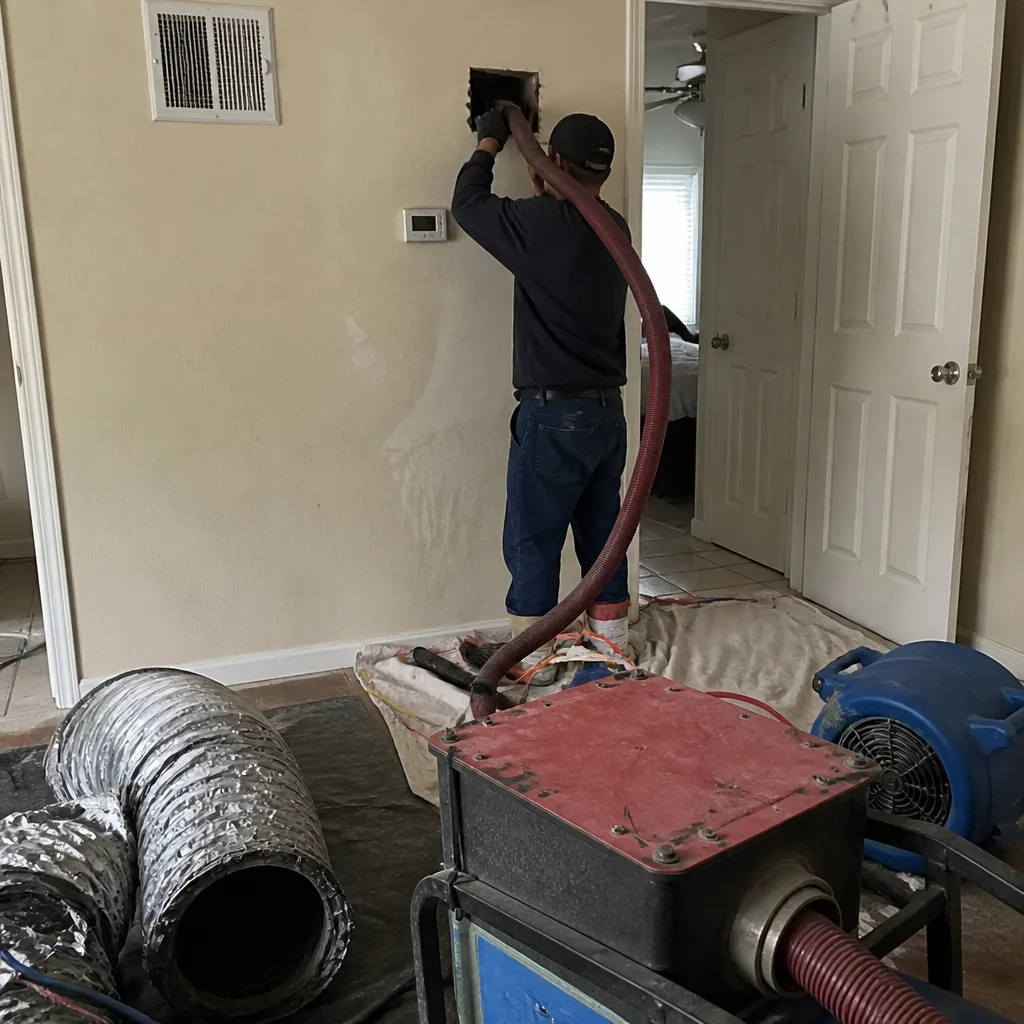 Before
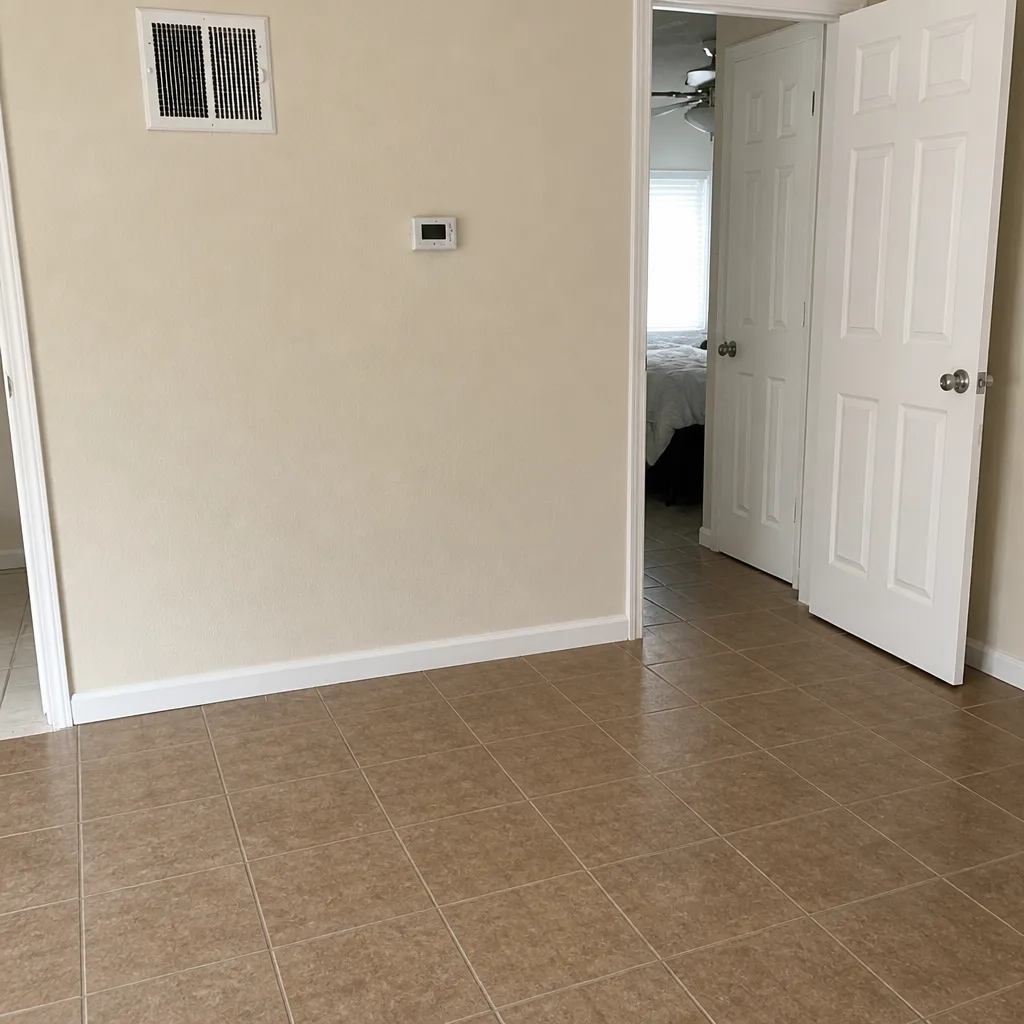 After
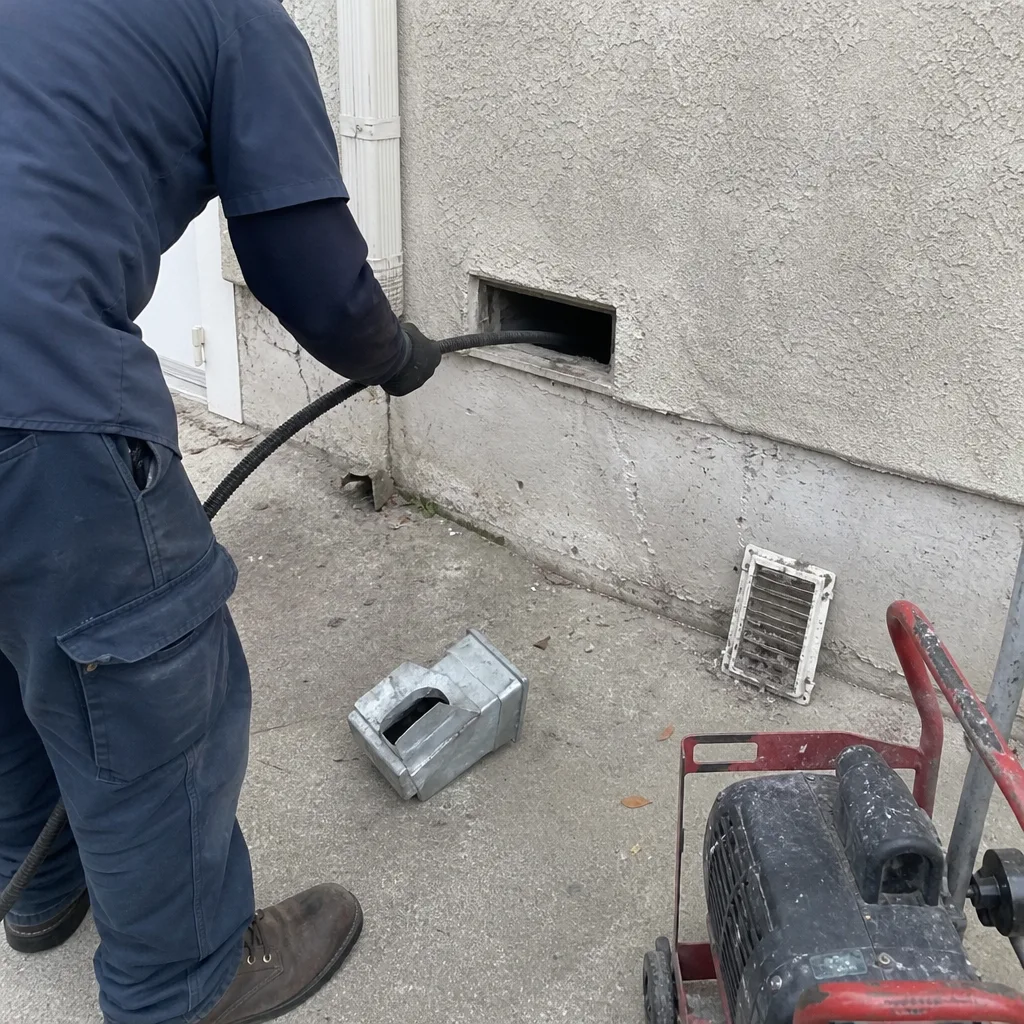 Before
 After
 Before
 After