
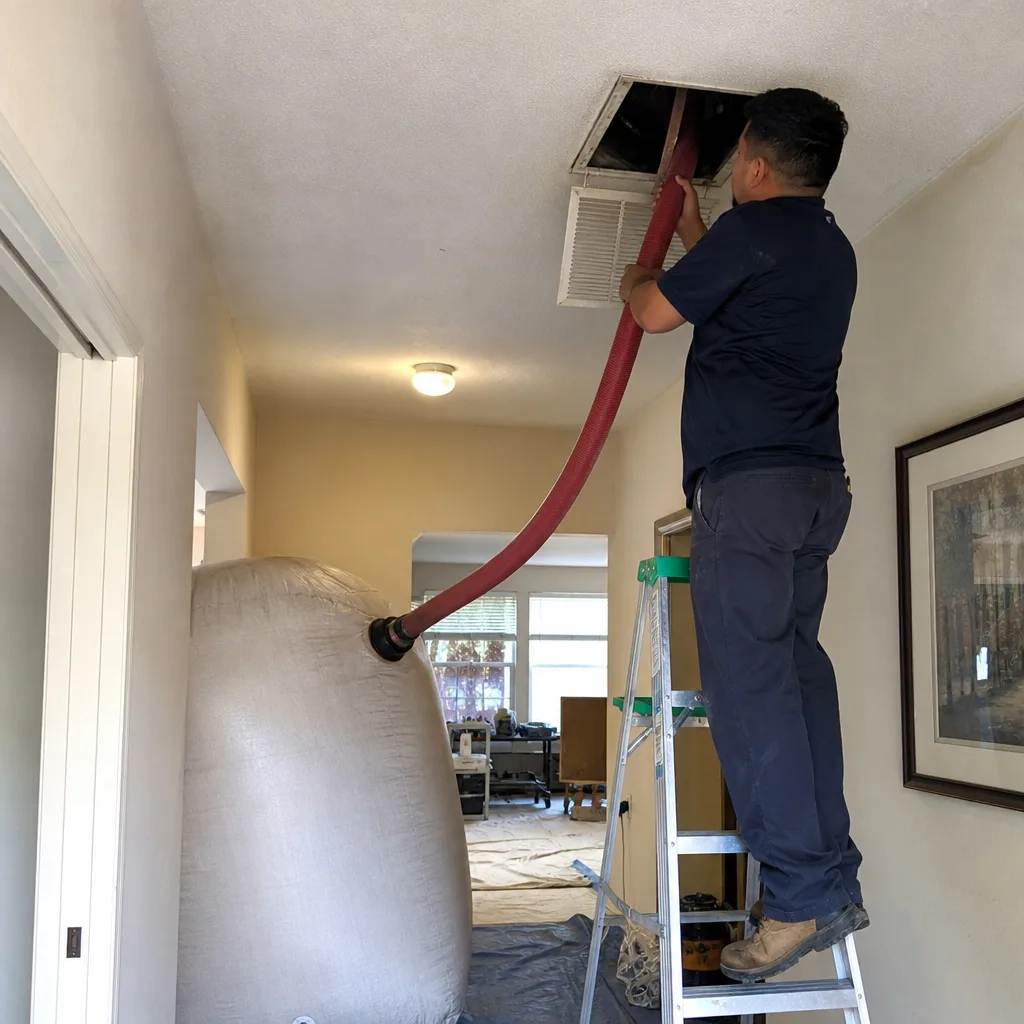
Last updated November 25, 2026
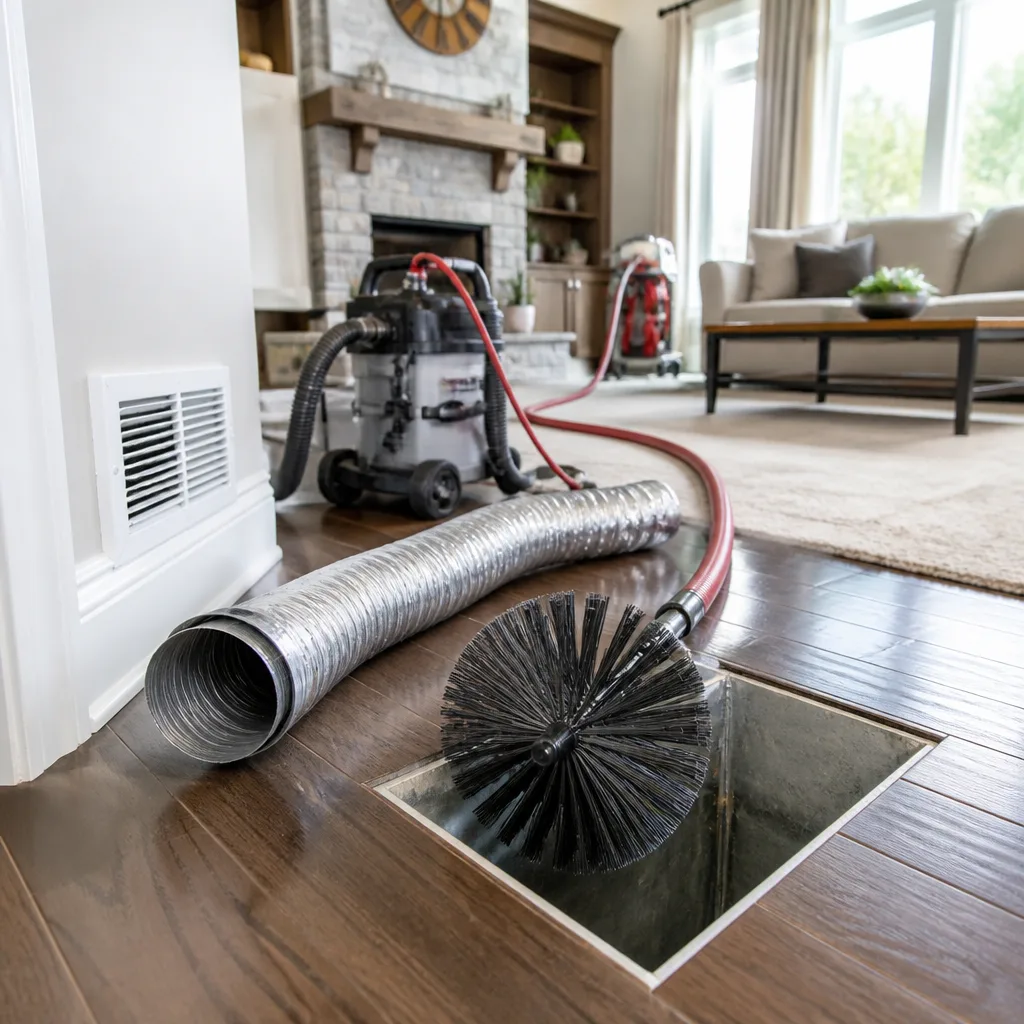 Whole-home duct cleaning
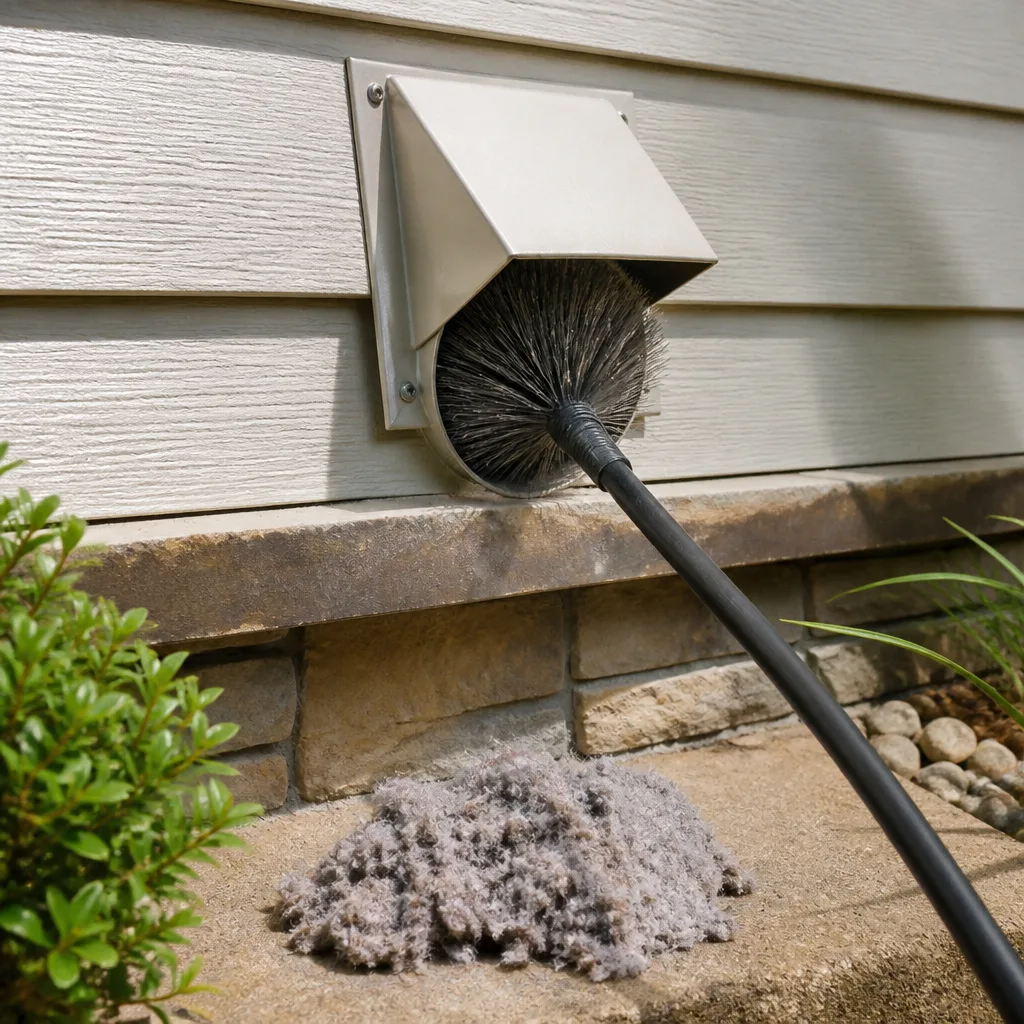 Dryer vent cleaning
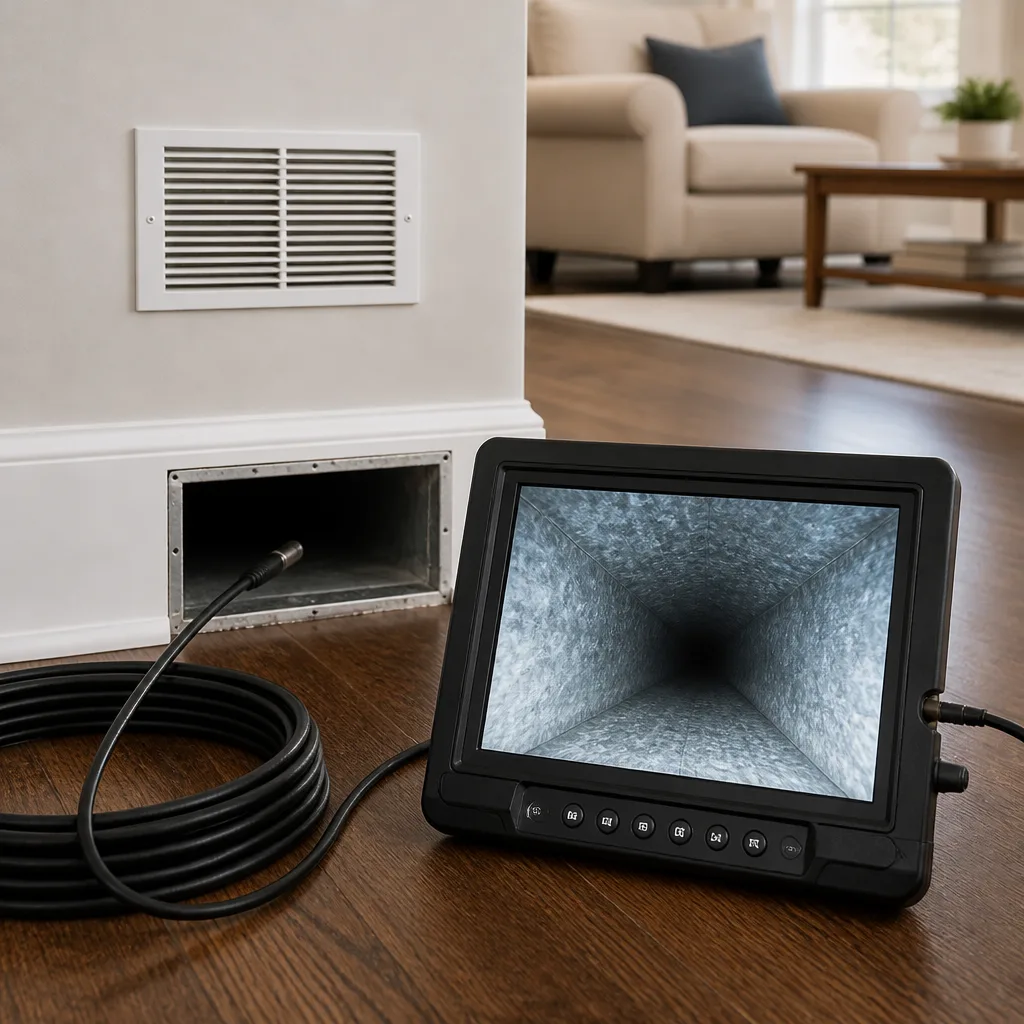 Camera inspection
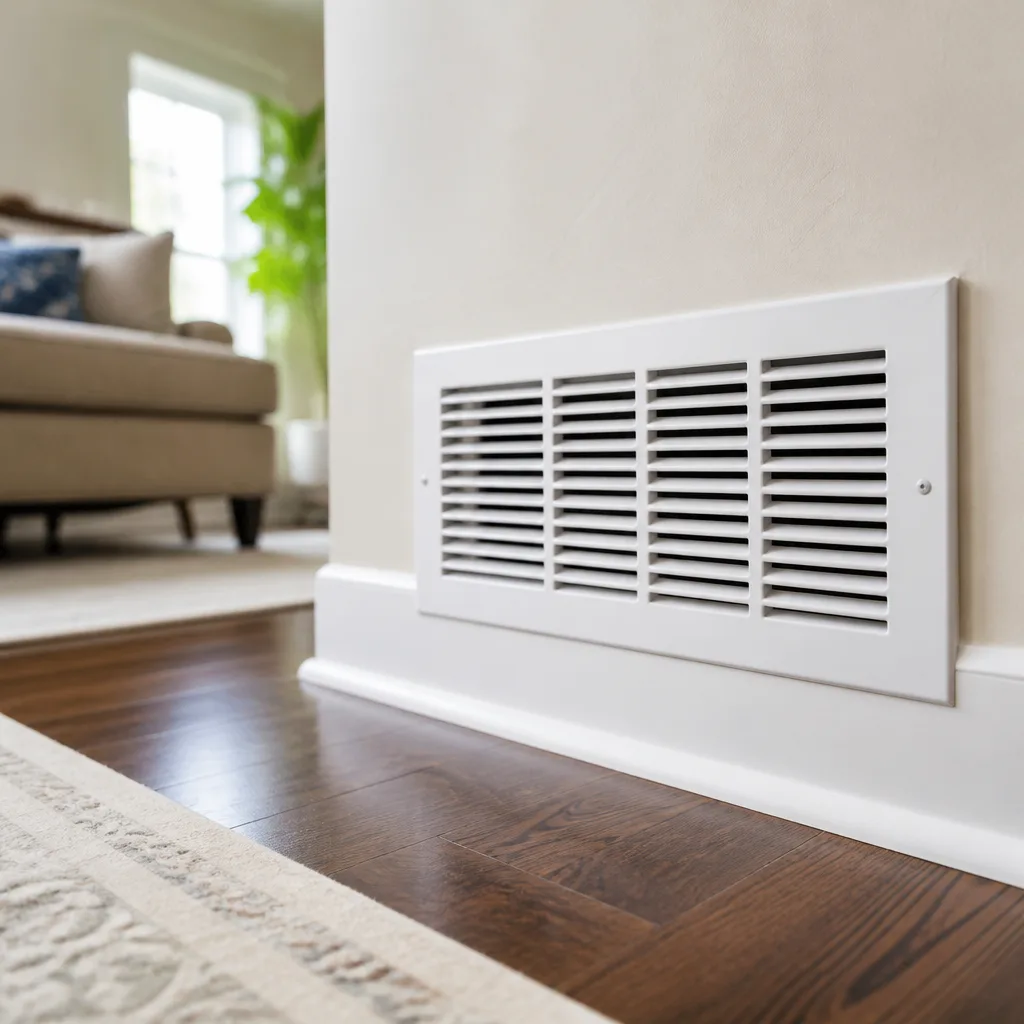 Sanitizing & deodorizing
Whole-system duct and dryer vent check with before-and-after photos - you see exactly what came out of your vents
That "$99 whole-house special" is a bait ad - the real number appears once they are in your hallway, or the "clean" is a shop-vac at the register. We photograph the inside of your ducts before and after instead.
Air Duct Cleaning Warning Signs: An Anaheim Colony Homeowner’s Reference Guide
A musty smell when the system kicks on does not automatically mean your ducts are dirty. In Anaheim Colony’s swings between dry Santa Ana wind days and humid coastal-influenced mornings, that smell is more often a wet evaporator coil or a clogged condensate drain than a duct full of dust. Clean the ducts without fixing the moisture source and the odor returns within weeks. That gap between symptom and cause is where homeowners lose money. This guide maps the specific things you can see, smell, and feel in your home to their most likely root cause – duct, equipment, filter, or building envelope – so you can describe the problem precisely instead of guessing.
Quick Answer
The main warning signs that point to duct contamination in Anaheim Colony are visible dust streaks at supply registers, uneven room temperatures, odors strongest when the fan starts, and filters that load up faster than their rated interval. Signs that usually trace back to the HVAC equipment rather than the ducts include musty smells after the system has been off, water stains near the air handler, and rattling or short-cycling. Getting that distinction right decides whether you need duct cleaning, a coil or drain repair, or a sealing job – and paying for the wrong one fixes nothing.
Styles & brands we work with
- Whole-home duct cleaning
- Dryer vent cleaning
- Camera inspection
- Sanitizing & deodorizing
Table of Contents
- The Symptom-to-Cause Table: What Each Warning Sign Usually Means
- How to Tell Duct Contamination From Coil Contamination
- Warning Signs Specific to Anaheim Colony’s Older Housing
- The Warning Sign Homeowners Underestimate: Fast Filter Loading
- When You Need Repair or Replacement, Not Cleaning
- What to Tell the Contractor When You Call
- What a Proper Duct Cleaning Actually Involves
The Symptom-to-Cause Table: What Each Warning Sign Usually Means
Most advice about duct problems stops at “dusty air” and “weird smell,” which tells a homeowner almost nothing. The useful question is which component is producing the symptom, because ducts, coils, filters, and the building shell all fail in different ways and get fixed by different trades. The table below is the one we work from when a call comes in from an Anaheim Colony home.
- Visible dust streaks or dark halos around supply registers – most likely duct contamination or a leak at the register boot pulling attic or wall-cavity air into the airstream. Cleaning plus sealing addresses both; cleaning alone leaves the leak.
- Dust settling on surfaces shortly after cleaning the house – often a return-air leak drawing from an unconditioned space, or a filter that is the wrong size for the slot and bypassing air around its edges.
- One or two rooms always warmer or cooler than the rest – commonly a crushed or disconnected flex duct in the attic, a damper stuck partly closed, or a register that was never balanced. This is a duct-delivery problem, not a cleanliness problem.
- Odor that appears only when the fan starts and fades when it stops – the strongest indicator of contamination inside the duct system itself. The fan pushes air across the source, so smell tracks the blower.
- Musty odor present even when the system has been off – usually a wet evaporator coil, a condensate pan holding standing water, or a damp closet where the air handler sits. Cleaning ducts without drying that coil brings the smell back.
- Allergy symptoms that worsen in specific rooms or during run time – possible duct debris, but also possible filtration that is too weak for the household. A higher-MERV filter setup from a line like Aprilaire can matter as much as a cleaning.
- Utility bills climbing with no change in habits – leaky ducts in an unconditioned attic lose conditioned air before it reaches the room. Repair and sealing often does more for the bill than a sweep.
Read the table as a starting point, not a verdict. In our experience, most Anaheim Colony homes with two or three of these symptoms at once have both a contamination issue and a leakage issue, which is why a full-scope company that cleans and seals handles the problem in one pass instead of handing you off between trades. That whole-system view – from the register to the air handler – is what separates a real diagnosis from a sweep.
How to Tell Duct Contamination From Coil Contamination
This is the single distinction that saves Anaheim Colony homeowners the most money, because the two problems produce similar smells and get confused constantly. The good news is you can narrow it down at home with observations, before anyone comes out. You are not fixing anything yourself – you are gathering evidence.
- Time the smell against the blower. Run the fan in “on” mode without heating or cooling. If the odor appears with the fan and fades when it stops, the source is in the airstream path – ducts, plenum, or a dirty blower wheel. If the odor lingers after the fan stops, suspect moisture at the coil or drain pan.
- Look at the condensate. Find the drain pan under the indoor coil (usually in a closet or the attic). Standing water, slime, or a rust line means the drain is partly clogged and the coil is staying wet. That moisture grows biological growth that smells exactly like “dirty ducts.”
- Check the coil face if you can see it. A matted, gray-brown film across the coil fins means the coil is loaded and restricting airflow. That condition mimics duct problems by cutting airflow to distant rooms.
- Compare rooms. Odor that is uniform across every register points to a system-wide source like the coil or blower. Odor or dust that is worse at specific registers points to contamination or a leak in that branch of ductwork.
- Note recent weather. Anaheim Colony’s humidity swings matter here. A smell that spikes after humid mornings and clears on dry, windy days is telling you about moisture, not dust.
If your observations point to moisture, cleaning the ducts first is the wrong order of operations. The moisture source has to be corrected, then the system cleaned, or the growth returns. When the evidence points to the ductwork itself, professional cleaning with proper negative-pressure equipment – the kind of setup that uses Abatement Technologies filtration to contain debris – is the right first step.
Warning Signs Specific to Anaheim Colony’s Older Housing
Anaheim Colony has a wide spread of housing stock, and the ductwork inside those homes was built to different standards depending on when the house went up. Some of the warning signs below are invisible until someone opens an attic or a closet, which is exactly why a knowledgeable contractor should look before cleaning. Cleaning a duct system with a structural defect can make the defect worse.
- Flex duct collapse indicators. Flex duct is the ribbed, silver-jacketed material common in attic runs. Look for runs that sag, kink at a sharp bend, or are crushed under stored boxes. Kinked flex cuts airflow to that room and traps debris at the pinch point. If a room never heats or cools well, a crushed run is a prime suspect.
- Signs of original duct insulation in pre-1980 homes. Older trunk lines were sometimes wrapped in a gray, paper-backed insulation that may contain asbestos. You cannot confirm this by looking, and you should never disturb, cut, or scrub suspected material. If the wrapping looks original and friable, stop and have it assessed by a qualified professional before any cleaning begins – cleaning equipment agitates exactly the kind of material you don’t want airborne.
- Deteriorated duct board. Duct board is a rigid fibrous material used to build plenums and some trunk runs. When it gets damp or ages, its inner surface can break down and fray. Aggressive cleaning on failing duct board can pull the surface apart, which turns a cleaning job into a rebuild. A contractor should inspect the interior condition before promising a clean.
- Disconnected joints and taped seams that have let go. Older duct tape dries and peels. A disconnected joint in the attic pulls hot attic air and insulation fibers into the supply stream – which shows up as dust at registers and higher bills.
These are the observations that separate an Anaheim Colony guide from a generic one, because the housing here is the context. If your home has any of these signs, the right sequence is inspection, then repair and sealing, then cleaning – not a sweep first and questions later. A contractor who quotes a cleaning without looking at the duct interior in an older Anaheim Colony home is skipping the step that matters most.
The Warning Sign Homeowners Underestimate: Fast Filter Loading
If your filter is saturating well before its rated interval – a 90-day filter clogging in three or four weeks – that is not a sign you need a better filter. It is a sign that air is bypassing the filter or that return air is being pulled from a dirty space. This is the warning sign homeowners overlook most often, and it costs them money in filter purchases while the real problem goes unaddressed.
Here is the plain logic. A filter only cleans the air that actually passes through its media. Air gaps around the filter frame, a filter that is slightly too small for its slot, or a return duct that leaks inside an attic all let unfiltered air into the system. That air carries dust into the blower, the coil, and the supply ducts, which is where it settles and loads the next filter even faster. It is a self-reinforcing loop.
Check for the common bypass points:
- A filter that slides loosely in the slot with visible gaps around the edges.
- A filter frame with torn or missing gasket material where it meets the housing.
- Return ductwork in the attic with unsealed joints or disconnected sections.
- A filter compartment that has been modified with tape or cardboard to hold a filter it was not built for.
Solving this usually involves two things: sealing the return path so the filter actually filters, and choosing a filter setup that matches the system’s blower capacity. Higher-MERV filtration is not automatically better – too much restriction starves airflow – which is where a proper filter housing from a trusted line like Honeywell or Aprilaire earns its keep. The point for an Anaheim Colony homeowner is that fast filter loading is a diagnostic clue, not a filter problem. It tells you the system is pulling dirty air from somewhere it shouldn’t.
When You Need Repair or Replacement, Not Cleaning
Cleaning fixes contamination. It does not fix a duct that has physically failed. The hardest part of a homeowner’s decision is separating the two, so here is how to tell when the warning signs point past cleaning to repair or replacement.
- Crushed or disconnected runs. A duct that no longer delivers air needs to be reconnected or replaced. Cleaning a crushed run cleans a duct that still cannot move air. Repair first.
- Duct board that is failing. Fraying or water-damaged duct board usually needs to be rebuilt, not cleaned. Cleaning can accelerate the breakdown.
- Widespread leakage at joints. If seams throughout the system are leaking into an unconditioned attic, sealing is the priority. A cleaned system with leaky ducts re-contaminates and wastes energy within a short time.
- Coil or drain-pan failure. If the moisture source is a failing coil, that is an HVAC repair. Cleaning after the repair, not before.
- Pervasive biological growth tied to a persistent moisture problem. If the growth keeps returning after cleaning because the moisture was never fixed, the conversation shifts from cleaning to remediation of the moisture source plus sanitizing with a proven protocol – not repeat cleaning.
The clear pattern: any warning sign that involves the duct structure itself, moisture, or the equipment means cleaning is not the whole job. This is why we repair what we find, not just report it, and why Duct Repair & Sealing sits alongside cleaning on the service menu. A company that only cleans will tell you cleaning is the answer. A company that diagnoses the whole air-quality chain can tell you which fix actually solves the problem, then do that work in one visit.
What to Tell the Contractor When You Call
Precise language saves time and money. When you call about duct problems, describing specific observations lets the contractor recommend the right first step instead of a default sweep. Here is how to organize the call.
- State the symptom and its timing. “Musty smell that starts when the fan runs and stops when it doesn’t” is far more useful than “the air smells.”
- Name the rooms involved. “Two bedrooms are always warm while the living room is comfortable” points at a duct-delivery problem rather than a whole-system one.
- Mention your filter history. If filters are loading faster than their interval, say so. It signals bypass or return leakage.
- Note the home’s age and anything original. Pre-1980 duct wrapping, duct board, or original flex runs matter to the inspection plan.
- Ask what the visit will check. A serious contractor inspects the duct interior, the coil, and the filter setup before recommending a cleaning.
Call (844) 625-7366 for a free estimate. We answer 24/7. Fast dispatch from 7am to 7pm, Sunday through Friday. The estimate is free and the price is set per job by the written estimate, so you know the cost before any work starts.
What a Proper Duct Cleaning Actually Involves
Understanding the process helps you judge whether a quote is real. Professional duct cleaning is a controlled extraction operation, not a shop-vac pass. Here is what it should look like from the register to the air handler.
- Inspection first. The technician checks the duct interior, the coil, the filter setup, and the return path. This is where the symptom-to-cause work happens.
- Containment. Negative pressure is set up so debris is captured, not blown into your rooms. Professional setups use HEPA-level containment equipment, which is where Abatement Technologies filtration comes in.
- Agitation. The duct walls are scrubbed so debris that has clung to the surface actually releases. This is the step that separates real cleaning – using agitation systems like Rotobrush – from a nozzle that only skims the surface.
- Extraction. The loosened debris is pulled out under negative pressure and contained.
- Sanitizing where warranted. If the inspection found biological growth or odors, a sanitizing protocol addresses it, then the moisture source is corrected so it does not return.
- Sealing and repair. Leaks, disconnected joints, and failing sections are found and addressed so the cleaned system stays clean and efficient.
If your ductwork is in good shape and cleaning is the right step, our air duct cleaning service covers the full system with the equipment that does the job properly. Dryer vents are part of the same air-safety picture, and because the NFPA links dryer vent blockage directly to dryer-related home fires, our dryer vent cleaning service belongs in the same visit for many homes. If the inspection points to the equipment side rather than the ducts, comprehensive HVAC cleaning addresses the coil, blower, and cabinet. One company, no handoff gaps between diagnosis and remedy.
Common Mistakes to Avoid
- Cleaning ducts without finding the moisture source. If the smell traces to a wet coil or drain, cleaning brings it back within weeks. Fix the moisture first, then clean.
- Assuming every smell means dirty ducts. Musty odor with the fan off, water stains near the air handler, or rattling all point at equipment. A diagnosis before a cleaning saves the misfire.
- Chasing a low per-vent price. A cheap sweep that skims the surface leaves the contamination it was supposed to remove. Whole-system range plus a written estimate tells you what is actually being done.
- Cleaning a structurally failing system. Crushed flex runs, failing duct board, or suspected original insulating wrap need repair or assessment before cleaning. In Anaheim Colony’s older homes, this is the most common trap.
- Upgrading the filter instead of sealing the bypass. A higher-MERV filter cannot filter air that goes around it. Find and seal the bypass points on the return side first.
- Skipping the dryer vent. Vent blockage is a fire-safety issue, not just a duct-work issue. It belongs in the same health-and-safety review of the home’s air paths.
- Believing cleaning alone fixes high bills. Leaky ducts waste conditioned air in the attic. Repair and sealing, alongside cleaning, is what protects both the bill and the clean result.
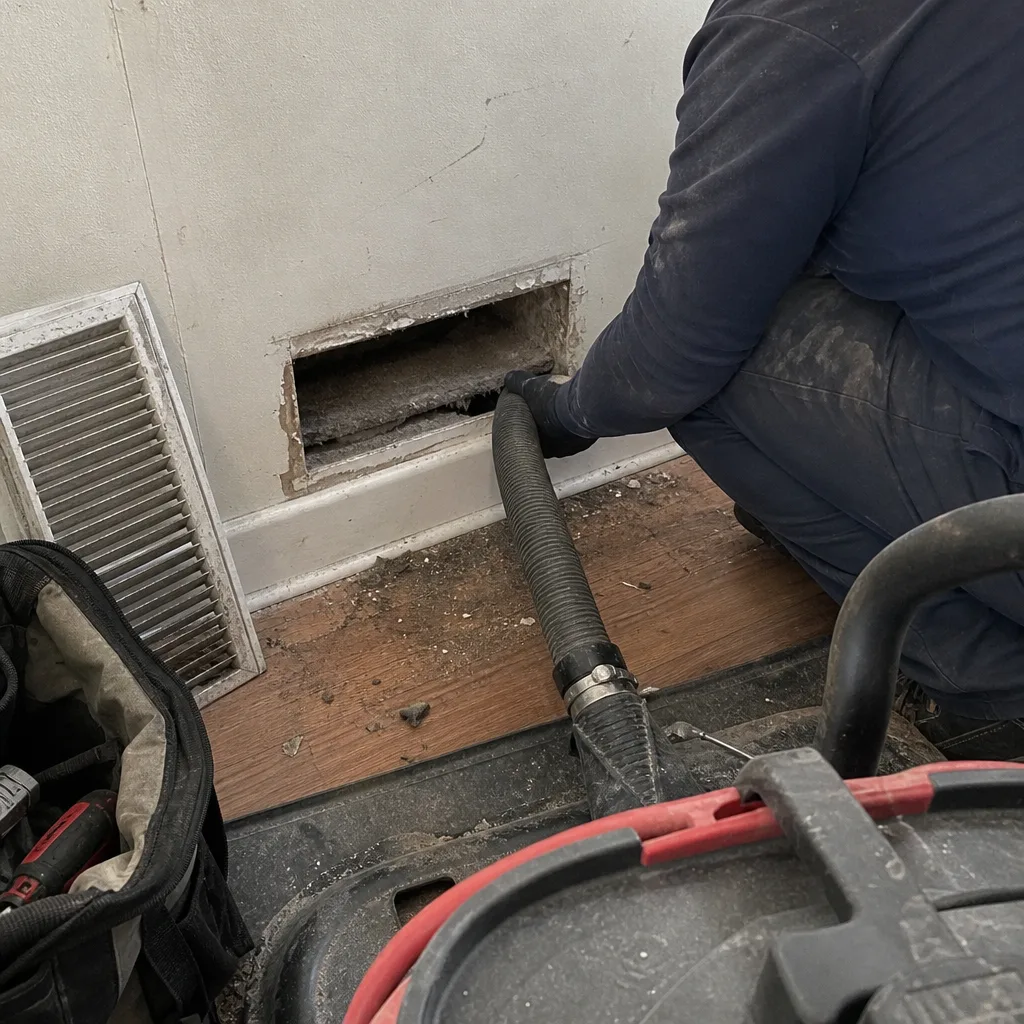
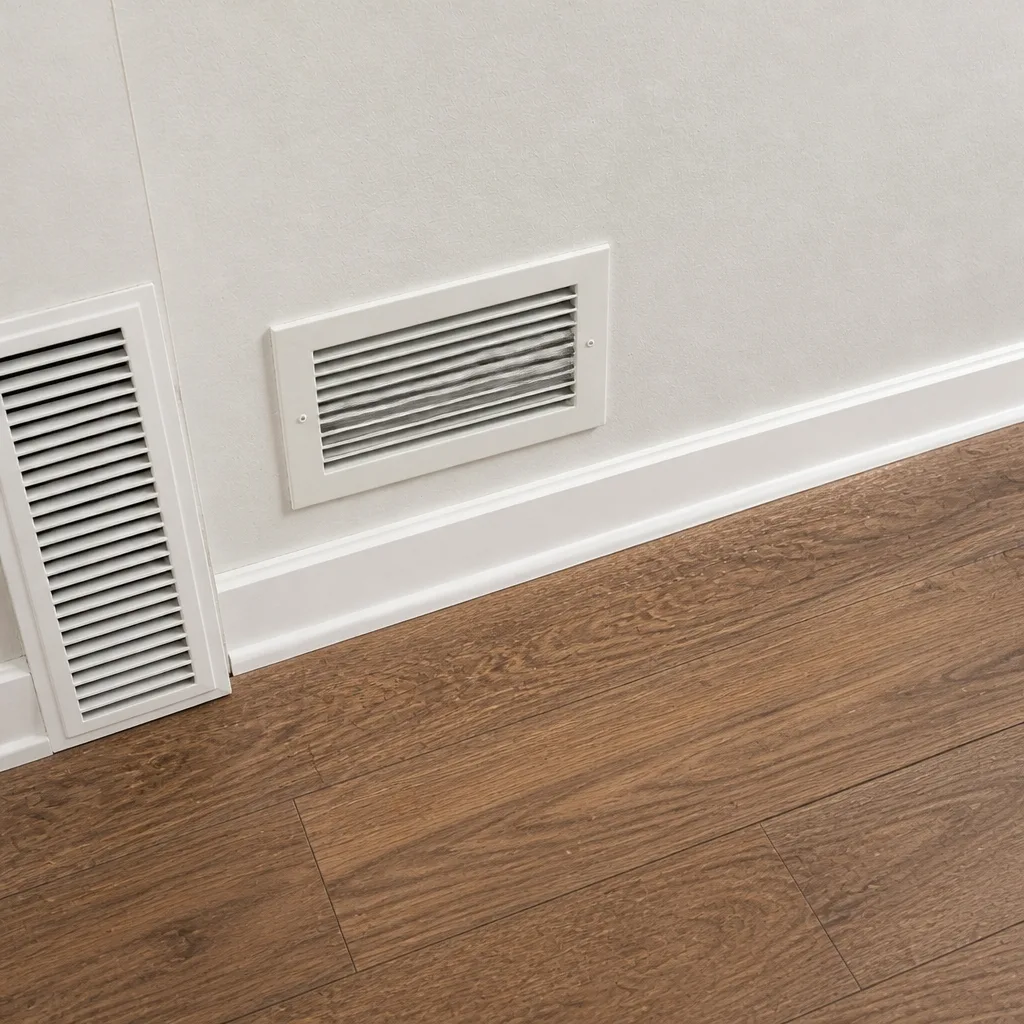
See the difference
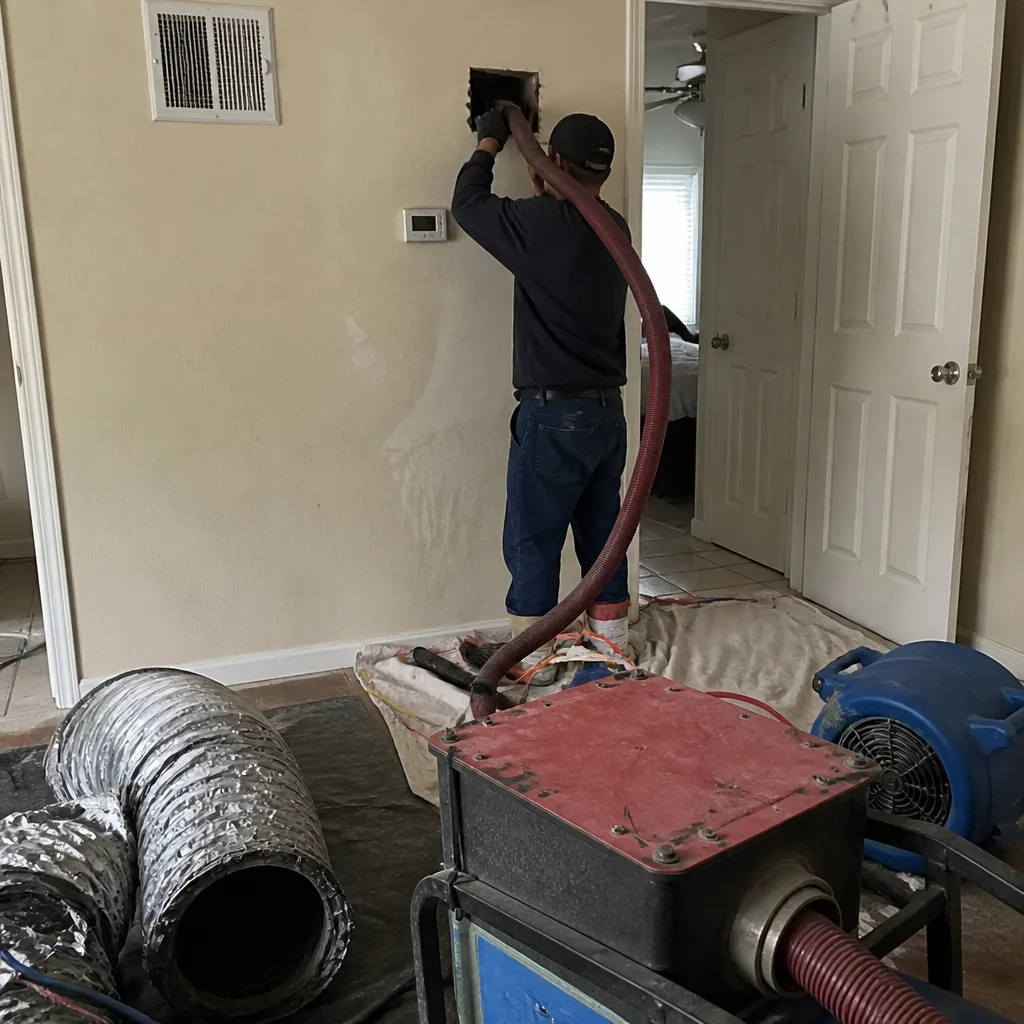 Before
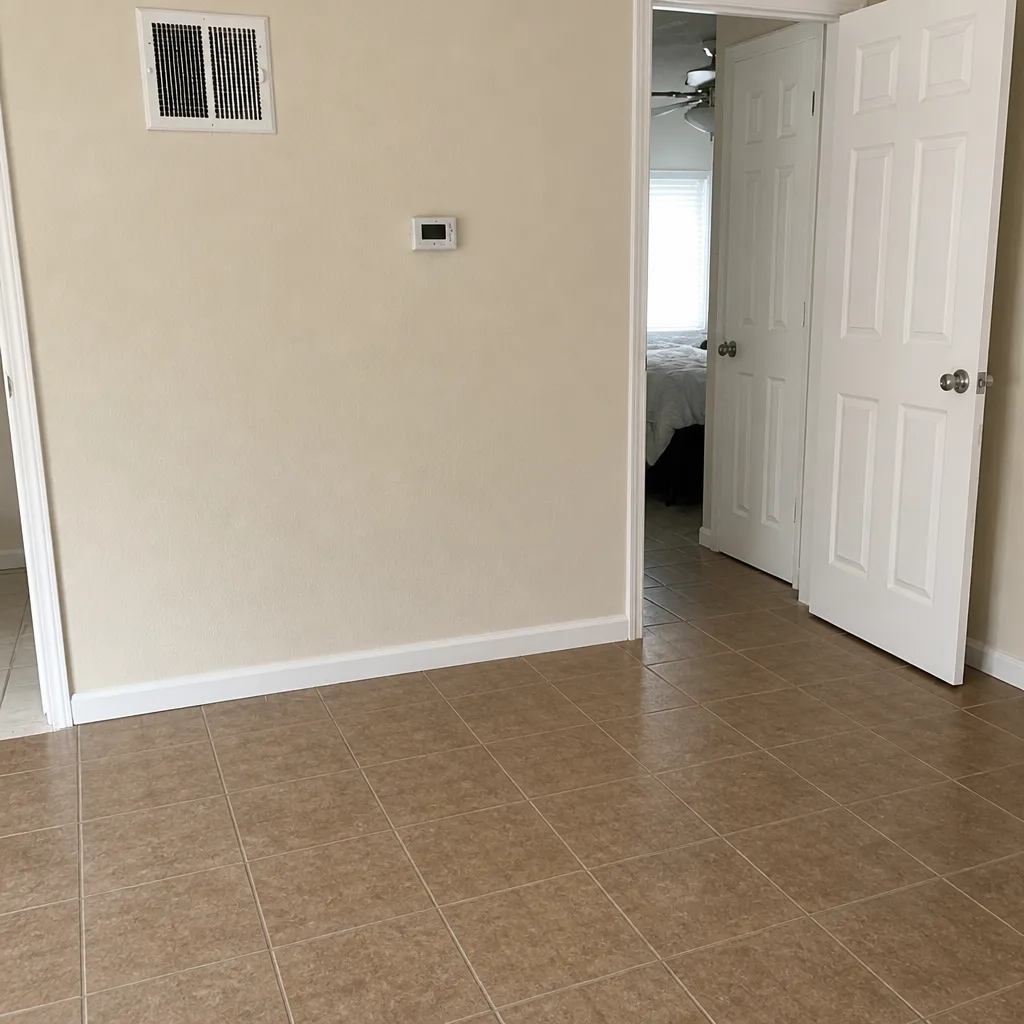 After
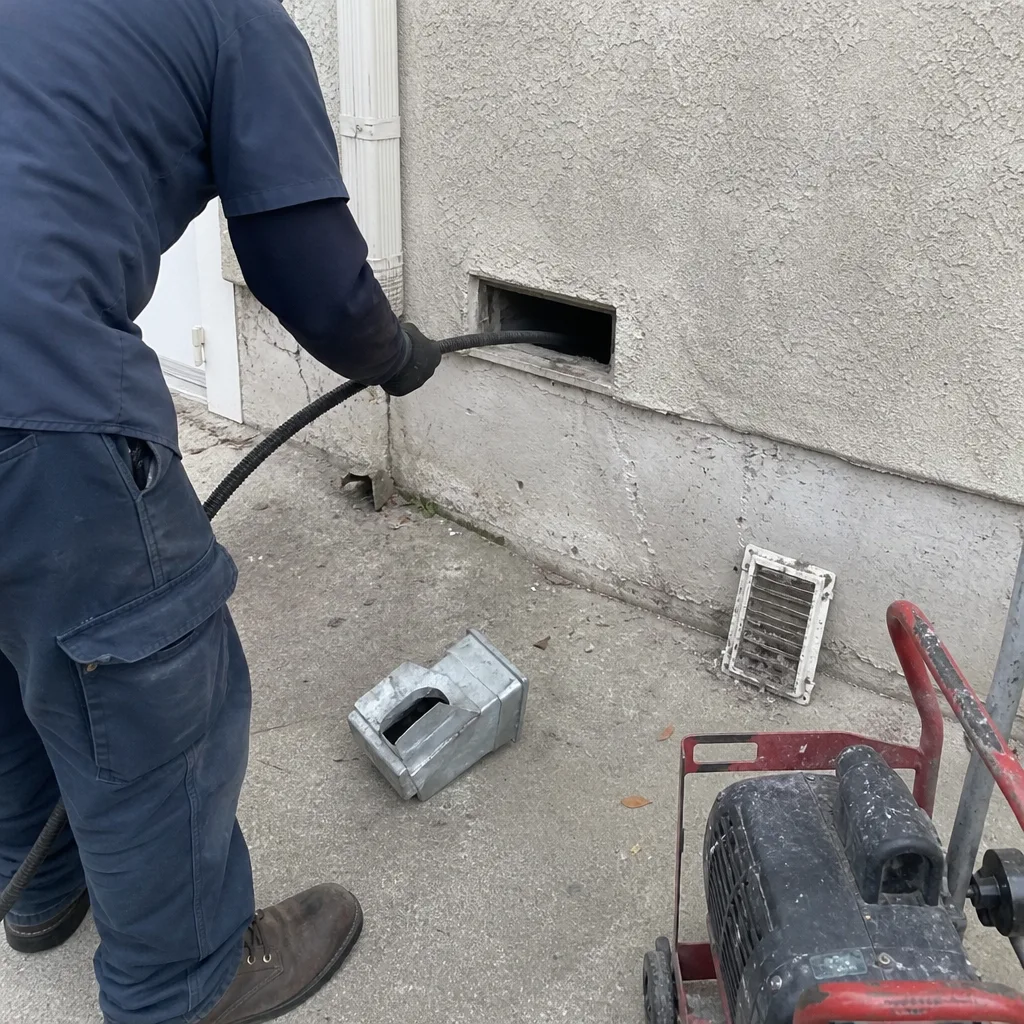 Before
 After
 Before
 After
When to Call a Professional
Call a specialist when the warning signs cluster – a fan-timed musty smell, dust at registers, uneven rooms, and fast filter loading together usually mean both contamination and leakage, which needs diagnosis, not a sweep. Call when you see a crushed or disconnected flex run, failing duct board, or any original-looking insulating wrap in an older Anaheim Colony home; those need inspection before anyone touches the ducts. Call when the odor returns after a cleaning, because a returning smell means the root cause was never fixed. Call when you don’t know whether it’s the ducts or the equipment, because guessing is where money goes to waste.
Air Duct Cleaning Anaheim Colony offers free estimates in Anaheim Colony – call (844) 625-7366. We answer 24/7. Fast dispatch from 7am to 7pm, Sunday through Friday. Our technicians have up to 9 years of experience, and the price is set per job by the written estimate before any work begins.
Frequently Asked Questions
The final price depends on the size of the system, the condition found during inspection, and how many components (coil, blower, dryer vent) are part of the job. Rather than quote a per-vent price that invites bait-and-switch, we give a whole-system range based on the written estimate, agreed before any work starts. Call (844) 625-7366 for an exact quote – estimates are free.
Cheap quotes usually skip agitation, containment, or inspection – the steps that actually release and capture debris. A surface skim that leaves the contamination in place isn’t a cleaning, and it can spread debris through the home if there’s no negative-pressure containment. A real estimate reflects the equipment and process the job needs, agreed as one flat price per system.
You should see before-and-after photos of your own ducts and a clear account of what was found and addressed. A contractor who shows you the interior condition before cleaning and confirms it after is giving you something to verify, not just a promise. Call (844) 625-7366 to book an estimate.
There’s no fixed schedule that fits every Anaheim Colony home. Households with pets, allergy or asthma concerns, recent remodeling, or a history of moisture issues tend to need attention more often, while a well-sealed, well-filtered system may go much longer. The warning signs in this guide matter more than a calendar.
Duct debris, dust, and biological growth can aggravate allergy and asthma symptoms in sensitive households, though the duct itself is rarely the only factor – filtration, moisture control, and sealing all matter. A proper inspection identifies what’s actually present so you address the real source, not just the symptom. Call (844) 625-7366 for an assessment.
Anaheim Colony’s swings between humid mornings and dry, windy days push a lot of moisture through HVAC systems, and that moisture feeds the growth that produces most “musty duct” smells. If the moisture source – a wet coil or a clogged condensate drain – isn’t corrected first, cleaning the ducts won’t make the smell go away. That’s why diagnosis comes before cleaning.
The Bottom Line
Duct cleaning warning signs only help if you read them correctly. Dust at registers, uneven rooms, fan-timed odors, and fast filter loading each point at a probable cause – duct contamination, leaking returns, crushed runs, or failing duct board – and moisture problems that mimic duct issues need the moisture fixed first. In Anaheim Colony’s older housing, inspect before cleaning so a structural defect isn’t made worse. Precision in describing what you see is what gets the right result the first time. If you’re unsure which fix your home needs, start with an estimate. Our technicians have up to 9 years of experience, and we repair what we find, not just report it. Call (844) 625-7366 for a free estimate on your air duct cleaning in Anaheim Colony.
Written by the team at Air Duct Cleaning Anaheim Colony.